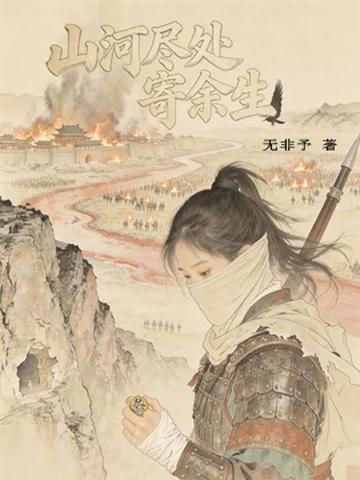
In the autumn of 1226, Genghis Khan conquered Xixia for the sixth time, and Heishui City fell. Yeli Qinghe, a 16-year-old party girl, lost her parents in the city massacre and was bought from the dead by the cold-blooded businessman Wu Zangang. This mean-mouthed and soft-hearted man used the meanest words to do the most affectionate things - saving her life, teaching her to survive, and guarding her all night long when she was seriously ill.
The two separated at the foot of Helan Mountain, and Qinghe decided to join the army. She joined the Xixia female soldier "Makui" and grew up to be a captain during the bloody battle at Keyi Gate, while Wu Zangang always guarded her silently - delivering supplies, blocking arrows, and rushing into the battlefield when she was injured.
However, troubled times do not allow children to love each other. In the Zhongxing Mansion, the upright officer Ye Lirendo confessed his love to Qinghe, but Wu Zangang used sarcasm to cover up his jealousy, and the two fell into a sadomasochistic relationship of "mutual harm". Qinghe discovered Wu Zangang's secrets of secretly funding the defense line and rescuing documents for many years, and finally understood the innocence behind his cynicism.
In the winter of 1227, the Mongolian army besieged Xingqing Mansion. Wu Zangang was captured while escorting Wenwen out of the city, and Qinghe thought he was dead. After the city was broken, she found her lover in a prisoner-of-war camp, all bruised and bruised, and held hands across the fence and agreed to "live on." After Qinghe was released, he frantically searched for Mu Zangang, but he disappeared.
Qinghe hid the Xixia literature in a stone chamber in Helan Mountain and waited for the rest of his life. Eight hundred years later, archaeologists discovered the bone-carved ring with the words "Waiting for You" engraved on it.
This is a story about war and protection, missing and waiting. Two people who lost everything in troubled times fell in love in the clumsiest way and spent their lives explaining: living is not for themselves, but for the person who is worth waiting for.