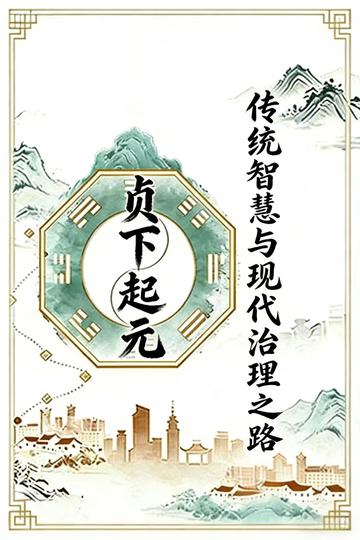
"Zhen Xia Qi Yuan" takes the six lines of the Qian hexagram of the "Book of Changes" as the narrative skeleton, blends the golden lock and jade pass, Feng Shui and Taoist wisdom, and writes a growth epic of the creative transformation of traditional wisdom in modern governance.
The protagonist Ying Yao started out as a young boy in the countryside. Under the enlightenment of his grandfather, he studied the "Book of Changes" and traditional Feng Shui wisdom, and entered the grassroots workplace with ancient philosophies. From being misunderstood when he first entered the official career, to proving his innocence through hard work, to taking root in the front line of urban and rural governance, integrating the concept of "accommodating nature and responding to people, and implementing dual uses" into practices such as community renewal, park planning, and policy implementation, he gradually established a modern governance methodology that combines humanistic warmth and scientific logic.
The five volumes of the book correspond to the realms of life such as hiding a dragon but not using it, seeing a dragon in the field, and a flying dragon in the sky. It lays out the path of advancement from grassroots practice to provincial promotion, and then to national top-level design. It is intertwined with the game of ideas, conflicts of interest, family ties and self-reflection. It not only describes the transformation of individuals from "skills" to "Tao", but also shows the process of China's excellent traditional culture from being questioned to being integrated into national policies, and from personal wisdom to public wealth.
In the end, Ying Yao retired at the peak of his achievements, returned to the origin of educating people, and interpreted the world of "the dragon has regrets" and "the emperor's rise to power". It is not only a biography of the growth of grassroots cadres, but also an era fable about the revitalization of traditional culture and the symbiosis of family and country.