Baidi City hangs alone on the Xiajiang River, and Tuogu's legacy is still heard. A generation of prime ministers, as lonely ministers, shouldered the critical task of reviving the Han Dynasty.
Liu Bei's Yong'an palace weeps and entrusts him to an orphan. Zhuge Liang accepts the order at the critical moment, but finds himself in a critical situation where the court is jealous, powerful ministers are restrained, and Wei and Wu are waiting for him. He guarded Kuimen alone, soothed the army and the people, performed eight formations, built wooden oxen, and joined forces with Wu Qice. On the bank of the Yangtze River where the waves were crashing, he worked step by step to support half of the Shu Han Dynasty.
The sound of the piano in the thatched cottage meets a confidant, the ingenuity of the organization is used to solve the dilemma, the universe is hidden in the eight formations, and the power struggle is fought in Baidi City. On the one hand, there is Li Yan's secret conspiracy and the undercurrent of the imperial situation. On the other hand, the great cause of the Northern Expedition and the legacy of the late emperor. Zhuge Liang sticks to the righteousness of his family and country and the love of his children, and seeks a way out in a desperate situation.
After defeating Jieting, he demoted himself to the third level. He worked hard and tasted courage before raising the flag of righteousness. The original superstar of Wuzhang fell, leaving only his clothes and clothes to accompany Xiajiang. From the lonely minister entering the gorge to the dedication of his life, from the inheritance from father to son to the end of the Shu Han Dynasty, it is a magnificent tragedy of the Shu Han Dynasty and a long historical scroll full of loyalty and wisdom.
The river is surging and Kuimen is steep. Thousands of years later, the incense burns in front of the Baidi Temple. The lonely minister who fulfilled his promise throughout his life has finally become an immortal legend.
Reader comments
"The White Emperor's Lonely Minister" takes Baidi City and Kuimen as the core stage, and unfolds Zhuge Liang's life of being entrusted with the task, deciding on the Northern Expedition, fighting for power, and caring for the people's livelihood. The forty chapters of the book have a rigorous structure, blending classical vernacular with modern Chinese. The narrative is relaxed and relaxed, not losing the solemnity of history and the tension of the novel.
The work does not deify Zhuge Liang, but depicts his true character as a "lone minister" who shouldered the heavy responsibility of entrusting himself, dealt with the undercurrents of the court, and cared about the common people in the world: the determination to express his will in Linjiang, the bloody struggle to kill him, and the torment of the dilemma of family and country, all are delicate and moving. Huang Ying's close friend has deep love, Li Yan's ambition is gradually revealed, and Zhuge Zhan inherits his legacy. The characters are vivid and three-dimensional, and the lines of intrigue and emotion are naturally intertwined. There is no deliberate sensationalism, but the character is everywhere.
From the eight formations of martial arts to the ingenuity of wooden cows and flowing horses, from the dangerous shoals of the Xiajiang River to the farewell of the White Emperor, the geographical atmosphere and the mood are highly integrated, and there is gentle human sentiment hidden in the desolation and heroism. The ending ends with a thousand-year look back, and the spirit of "devoting one's best efforts until one's death" runs throughout. It has both a sense of historical significance and a touching humanistic warmth. It is an excellent historical work with a correct intention, a steady writing style, and a broad layout.
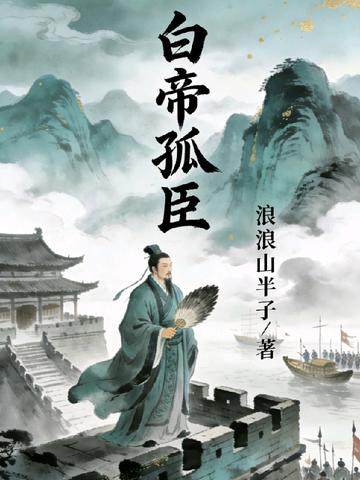
"The White Emperor's Lonely Minister" takes Baidi City and Kuimen as the core stage, and unfolds Zhuge Liang's life of being entrusted with the task, deciding on the Northern Expedition, fighting for power, and caring for the people's livelihood. The forty chapters of the book have a rigorous structure, blending classical vernacular with modern Chinese. The narrative is relaxed and relaxed, not losing the solemnity of history and the tension of the novel. The work does not deify Zhuge Liang, but depicts his true character as a "lone minister" who shouldered the heavy responsibility of entrusting himself, dealt with the undercurrents of the court, and cared about the common people in the world: the determination to express his will in Linjiang, the bloody struggle to kill him, and the torment of the dilemma of family and country, all are delicate and moving. Huang Ying's close friend has deep love, Li Yan's ambition is gradually revealed, and Zhuge Zhan inherits his legacy. The characters are vivid and three-dimensional, and the lines of intrigue and emotion are naturally intertwined. There is no deliberate sensationalism, but the character is everywhere. From the eight formations of martial arts to the ingenuity of wooden cows and flowing horses, from the dangerous shoals of the Xiajiang River to the farewell of the White Emperor, the geographical atmosphere and the mood are highly integrated, and there is gentle human sentiment hidden in the desolation and heroism. The ending ends with a thousand-year look back, and the spirit of "devoting one's best efforts until one's death" runs throughout. It has both a sense of historical significance and a touching humanistic warmth. It is an excellent historical work with a correct intention, a steady writing style, and a broad layout.