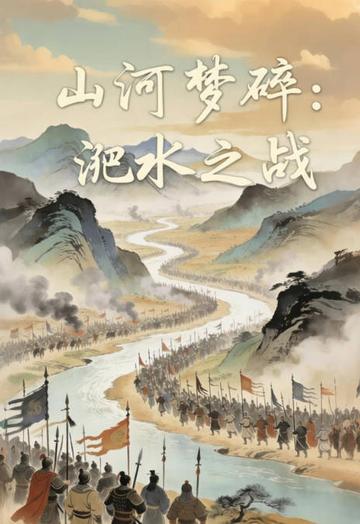
In the eighth year of Taiyuan, Fu Jian, the former king of Qin, led his 970,000 troops southward, vowing to destroy the Eastern Jin Dynasty and unify the world. Under the conscription order, the Hu and Han ethnic groups in the north were forced to join the army, and the people complained. At the Jiankang court, all the clans had their own agendas. Xie An overcame everyone's opinions and sent 80,000 Beifu troops north to meet the enemy.
The two armies faced each other along the Huaihe River. During the night battle in Luojian, Liu Laozhi defeated the enemy's 50,000 with 5,000 elite troops and reversed the decline. On the bank of Feishui River, Xie Xuan sent an envoy to ask the Qin army to "retreat slightly" so that they could fight decisively. Fu Jian was about to attack halfway across the river, but unexpectedly the flag moved and the 200,000-strong army was thrown into chaos. The soldiers of the Northern Prefecture took advantage of the opportunity to cross the river and rushed into the enemy's formation like tigers descending from the mountain. The entire front of the former Qin Dynasty collapsed, trampling on each other, and filling the Feishui with corpses.
In just a few months, the dream of the empire was shattered. Murong Chui crossed the river to restore the country, Yao Chang raised troops in the pass, and the north fell back into separatist rule. Fu Jian died in the Xinping Buddhist Temple. On his deathbed, he angrily denounced the rebel generals: "How dare Xiao Qiang force the emperor!" Although the Eastern Jin Dynasty preserved the country, internal strife among the clans intensified, paving the way for the country to change hands decades later. A great war shattered the dream of reunification and rewrote the fate of the North and the South for hundreds of years.