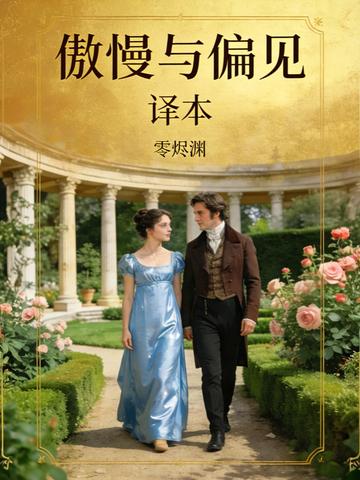
"Pride and Prejudice" (Urobuchi Genshi dark adult style·Translation·Introduction)
When Jane Austen's classic is infused with Gen Urobuchi's dark texture and adult edge, "Pride and Prejudice" loses its pastoral romance and becomes a human game that tears away the pretense of respectability.
The translation repaints the hustle and bustle of Longbourn from a cold perspective: hasty marriages tear apart family warmth, vanity envelops ignorant souls, and everyone is struggling between desire and respectability. Elizabeth's intelligence is the sobriety and pain after being beaten by prejudice and truth; Darcy's arrogance hides the sincerity and misunderstood affection that is not dare to be delivered under the shackles of identity; Wickham's tenderness is a sharp blade wrapped in lies; Jane's tenderness is the fragility repeatedly crushed by reality.
The translation abandons the romantic filter and goes straight to the dark reality: marriage hides the exchange of interests, respectability is all hypocrisy, and growth is the courage to face mistakes and accept the truth after seeing clearly the ugliness of human nature. From Meryton to Pemberley, from Hunsford to Brighton, every scene is a testing ground for human nature. Some people sink, some wake up, and some persist, but none can escape their own stupidity and paranoia.
This is not a love fairy tale, but an adult human apocalypse. It cuts through the class barriers and the darkness of human nature with sharp strokes, allowing the encounter between Elizabeth and Darcy to move from hostility and prejudice to truth and redemption, becoming a difficult practice of facing the truth. There is no absolute perfection, only the cherishment in the brokenness; there is no perfect character, only everyone's struggle to make a choice between desire and conscience, which hides the pathos and strength of Xuanyuan Xuanshi.