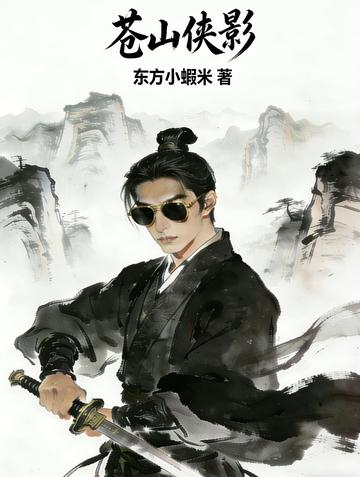
A classic wuxia tale set against the backdrop of the Hongtong Great Locust Tree migration, with no fantasy elements. It begins with a bloody case and follows the protagonists’ experiences, choices, and growth against the backdrop of history.
From the third year of Hongwu (1370) to the thirty-fifth year (1402) of the early Ming dynasty, Emperor Taizu Zhu Yuanzhang implemented a large-scale policy of migration and land reclamation. The Great Locust Tree in Hongtong, Shanxi, became the main gathering point and point of departure for this migration movement, which lasted more than thirty years and affected millions of people. It is known to history as the “Hongtong Great Locust Tree migration.”
Since the end of the Yuan dynasty, the Central Plains, including Henan, Shandong, Hebei, and northern Jiangsu, had endured four large-scale wars. Years of floods, droughts, and locust plagues had also caused the Yellow and Huai Rivers to burst their banks repeatedly. The Central Plains were left with “roads choked with weeds and no trace of human habitation.” Fertile fields stretching for thousands of miles became overgrown wastelands, the local people were displaced, and fewer than one in ten remained. Labor was in critically short supply, land lay barren, and tax revenues plummeted, directly threatening the rule of the newly established Ming dynasty.
Taking the advice of Su Qi, prefect of Zhengzhou, Liu Jiugao of the Ministry of Revenue, and others, Zhu Yuanzhang implemented the policy of “moving people to less crowded regions.” Combining recruitment with compulsory resettlement, he organized Shanxi residents to move to wastelands in the Central Plains and along the frontier. Military, civilian, and merchant farming colonies were established side by side to restore agricultural production. Most migrants came from places such as Pingyang, Luzhou, Zezhou, and Fenzhou in Shanxi. They had to gather at the Great Locust Tree in Hongtong to complete their migration paperwork and receive travel expenses, cotton clothing, and settlement funds. They were then escorted in batches to 18 provinces and 498 counties, including those in Henan, Shandong, and Hebei.

It was very well written, and I was moved by it. Except for some wording issues, it's great. Come on, author
The author's writing style is really good, and the novel is quite exciting. The setting of the storyline is link-by-link, which really makes people feel very good.
It's beautiful and has a wonderful storyline. It's one of my favorite books.
The plot is compact and not procrastinating, the pacing is just right, and the writing is really good.
Love, love, the plot is smooth, and it has received five-star reviews.
The writing is very good! The plot is unexpectedly good
The author writes well, the story is fascinating and beautiful
The story is very good, but the writing is a bit slow. Please update it soon.
A book that I can read in one sitting, looking forward to the follow-up
The content is very interesting, the writing is sophisticated, and the characters are well-drawn.