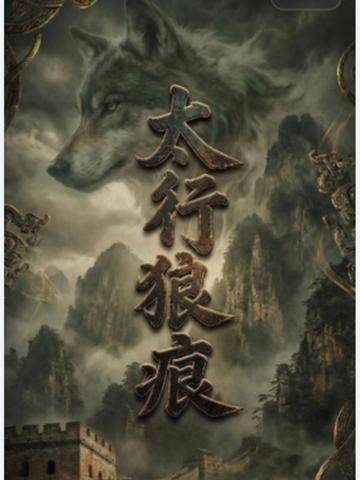
Content introduction of "Taihang Wolf Mark"
"Taihang Wolf Trace" anchors the rise and fall of the Zhongshan Kingdom, the "eighth hero" of the Warring States Period, over three hundred years. It uses the "Wolf Bloodline" of the Xianyu Tribe of the Di Tribe as its bones and "Wolf Talisman, City Bricks, and King's Cauldron" as its soul to unfold a civilizational epic of survival through cracks.
During the reign of King Weilie of the Zhou Dynasty, the leader of the Xianyu tribe, Gu Gu, led his tribe to flee Zhao and move to the city. On a snowy night in Taihang, they melted wolf talismans to cast city bricks and established Lingshou as the capital of the country. The pattern of wolf heads on the bricks was the Di people's oath to "feed the soil with blood." In the next hundred years, the descendants of the Lang family guarded the Dongyuan and forged iron swords, tearing their way out between the fangs of Yan, Zhao and Qi. When Duke Huan returned to the country, Lang used the strategy of "uniting Yan to resist Wei" to retake the country;
However, King Wuling of Zhao rode in Hufu and shot, and his iron hoofs trampled the river to pieces. The Dongyuan City was destroyed, and the wolf's grandson knelt down to offer the city defense map. The blood mark on the map overlapped with the sparks splashed by his grandfather when he was smelting iron. The Lingshou Palace collapsed, and the king's palace smashed the cauldron and died for the country. The wolf pattern on the fragments is still stained with iron filings from Taihang.
After the fall of the country, wolf symbols were put into stoves and city bricks, and Di survivors hid the fire of civilization in cooking smoke. In the Han Dynasty, craftsmen's mothers cast cauldrons to hide the text of Di. In the Sui Dynasty, peasant women built bricks to build field ridges. Contemporary archaeologists shovel down the remaining bricks with wolf patterns - what their fingertips touch is the warmth of blood that has not been cold for three thousand years.
This is not a simple history of national subjugation. When the wind from Taihang passes through the heritage park, and the wolf shadows on the city bricks merge with the contemporary lights, we realize that the so-called motherland is never the outline of the territory, but the roots of the soul and the charm melted in the soil. It is the answer written by the people of Xianyu with bronze, blood and wheat fragrance: The most resilient civilization is never afraid of being buried in the dust.