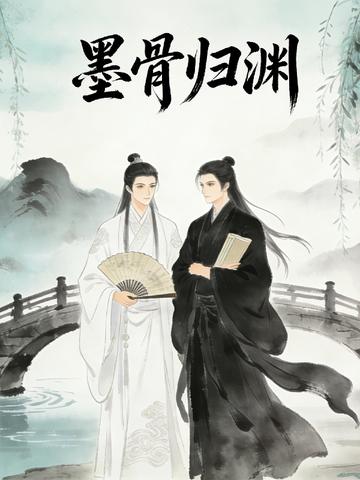
When Xiao Che was a child, he was the little prince who clung to the knee of King Jing'an Pei Zimo. He was assassinated at the age of five. It was the God of War of the Zhou Dynasty who shielded himself from the poison, used a pair of legs of the God of War, and strengthened his heart and lungs to save his life. Since then, Pei Zimo's legs have been lost, and his heart and lungs have been damaged for many years, but he still uses his broken body as a tutor and worked hard to teach him to become a prince.
When Xiao Che grew up, he was blinded by his desire for power. He despised him for being disabled and weak, and regarded him as the most unbearable stain on the road to becoming an emperor.
After his father revealed the whole truth, Xiao Che searched frantically for a year, only to see Pei Zimo with white hair and eyes covered, lying on the bed with a dead heart. He died of regret, only to be reborn back to the day he hurt others.
In this life, he gave up his imperial pride and only wanted to atone for his sins and stay together. He didn't know that the strange poison planted in Pei Zimo's body to save him actually allowed men to become pregnant.
The broken body is difficult to heal, and the poison is difficult to remove, but in this life, Xiao Che protects his frail, sick and struggling Uncle Wang, protects the little bloodline that unexpectedly comes, and uses the country as an employer and the rest of his life as a promise to warm up the already cold heart.
Reader comments
This article about Uncle Wang and the Prince is similar to the other article about Xiao Yunzhao and Jamel Xiao. They both devoted their hearts and souls to each other with true feelings and sacrificed for each other without reservation. In the end, they were humiliated and tortured to death by the wolf cubs they raised. However, Xiao Yunzhao's article was too cruel. It was physical abuse. He broke his legs, cut off his hands, cut out his tongue, raped and locked up with iron chains every day, etc. It was inhumane, and Zhao was tortured to death in the end. I couldn't bear to read this article. It was verbal abuse, and the hurtful words were like sharp knives. Ling Chi repeatedly killed Uncle Wang in the end. I read the article about Zimo's death and cremation, which brought tears to my eyes. But the prince was reborn and regretted, and exchanged his sincerity and true feelings for Uncle Wang's love. He was happy [smile]
The character design is good and pretty, but should I say that Xiao Che in his previous life was really too much?
The author is great. Although I finished reading this book, I read most of the first half and it was so sad. Dear author, can you write better in the follow-up and not be so cruel?
Love it. I really like the two little cubs.
I like it very, very much. It looks so good. Pei Zimo
Very beautiful and worth recommending
It was well written and made me cry a lot.
Super invincible and beautiful
Very beautiful, highly recommended to everyone
It's so well written, touching and very beautiful.
I cried several times, I couldn't bear to watch it and still wanted to watch it!
It's so beautiful, it made me cry a lot
The character relationship setting is very novel and worth a look👀
Ah ah ah ah ah so beautiful
Love this book very much!
The author's writing style is so good. Although it was quite cruel in the early stage, after the rebirth, he wrote the sincere redemption of the prince after he realized that he was wrong. Excellent sense of proportion: writing about 'love' in an ancient imperial family can easily turn into a modern family drama. However, in the author's writing, the love between father and son includes the strictness of "hoping for it to be successful", and the courtesy of monarch and minister is always present. The filial piety of the daughter-in-law is reflected in the care and dedication of the father in regulating the body, while the innocence of the two grandsons is cleverly balanced with the principle of "carrying joy but not intervening in politics". The writing is not overly polite or sensational, but there is warmth everywhere.
This article about Uncle Wang and the Prince is similar to the other article about Xiao Yunzhao and Jamel Xiao. They both devoted their hearts and souls to each other with true feelings and sacrificed for each other without reservation. In the end, they were humiliated and tortured to death by the wolf cubs they raised. However, Xiao Yunzhao's article was too cruel. It was physical abuse. He broke his legs, cut off his hands, cut out his tongue, raped and locked up with iron chains every day, etc. It was inhumane, and Zhao was tortured to death in the end. I couldn't bear to read this article. It was verbal abuse, and the hurtful words were like sharp knives. Ling Chi repeatedly killed Uncle Wang in the end. I read the article about Zimo's death and cremation, which brought tears to my eyes. But the prince was reborn and regretted, and exchanged his sincerity and true feelings for Uncle Wang's love. He was happy [smile]
The character design is good and pretty, but should I say that Xiao Che in his previous life was really too much?
The author is great. Although I finished reading this book, I read most of the first half and it was so sad. Dear author, can you write better in the follow-up and not be so cruel?
Love it. I really like the two little cubs.
I like it very, very much. It looks so good. Pei Zimo
Very beautiful and worth recommending
It was well written and made me cry a lot.
Super invincible and beautiful
Very beautiful, highly recommended to everyone
It's so well written, touching and very beautiful.
I cried several times, I couldn't bear to watch it and still wanted to watch it!
It's so beautiful, it made me cry a lot
The character relationship setting is very novel and worth a look👀
Ah ah ah ah ah so beautiful
Love this book very much! The author's writing style is so good. Although it was quite cruel in the early stage, after the rebirth, he wrote the sincere redemption of the prince after he realized that he was wrong. Excellent sense of proportion: writing about 'love' in an ancient imperial family can easily turn into a modern family drama. However, in the author's writing, the love between father and son includes the strictness of "hoping for it to be successful", and the courtesy of monarch and minister is always present. The filial piety of the daughter-in-law is reflected in the care and dedication of the father in regulating the body, while the innocence of the two grandsons is cleverly balanced with the principle of "carrying joy but not intervening in politics". The writing is not overly polite or sensational, but there is warmth everywhere.