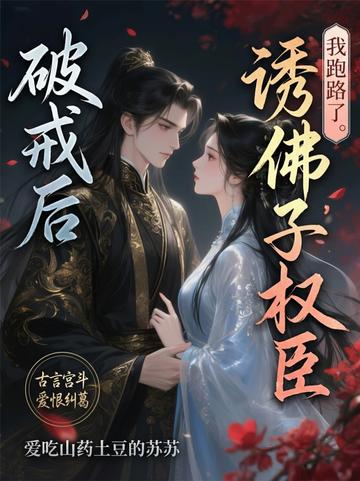
A hundred years after the founding of the Zhou dynasty, the imperial power was as weak as a candle. Pei Tan, the chief minister of the cabinet, had overwhelming power and was in an undercurrent of struggle with the prince of the East Palace. A trumped-up "imperial examination fraud case" wiped out the entire Shen family, a third-rank official in Beijing, except for the legitimate daughter Shen Hua, who was reduced to a slave in the Jiaofang Division.
Prince Xiao Jingheng brought her back to the East Palace as a "benefactor" and gave her the position of female official, but ordered her to dance barefoot and knock on the door of the chief assistant's study late at night - trading her beauty for exam questions and using her body as a chess piece. Shen Hua lowered her eyes in response, but there was a sentence engraved in her heart: Whoever becomes my sword, I will be its sheath.
The first time Chief Assistant Pei Tan saw her was under the lamp. While she was grinding the ink, her fingertips lightly traced the back of his hand. When she raised her eyes, her autumn eyes were full of timidity and temptation. He held her chin and said in a calm tone: "The Shen family's daughter has harder bones than her father." She did not flinch, but leaned forward an inch - that inch was a cliff, an abyss, and the longest road she had ever walked in her life.
Who is the presiding judge in the death of Father Shen? What kind of past is hidden in that jade pendant given to me when I was young? When "revenge for killing her father" and "life-saving grace" are intertwined, should she move forward with the knife, or should she fall into the scarred palm of the man?