Her name was Gongsun Ran, the least cherished second daughter of Gongsun Zan.
At thirteen, she refused an arranged marriage and fled north, disappearing into the lands beyond the Great Wall. No one knew she had mastered military texts and taught herself martial arts. No one knew her father had secretly given her five hundred cavalrymen. She never looked back, but she remembered it for ten years.
By Lake Baikal, she began with three thousand horsemen. Over the next decade, she swept across the northern frontier and built an army of ninety thousand.
She wore silver armor and rode a white horse, wielding a forty-jin silver spear that gleamed like snow. Her mighty bow could be drawn to a full moon, its arrows swift as a startled swan. When she charged, her silver-armored cavalry surged like a tide, with her at the vanguard amid a sea of troops. When she wheeled around, an arrow split the air, and an enemy general fell from his horse a hundred paces away. The Hu called her the “White Horse Asura,” while the Han army called her the “Silver-Armored General.”
In 195 CE, after his defeat at the Battle of Jieqiao, Gongsun Zan was trapped in Yijing, on the brink of death.
Ninety thousand iron cavalry rode south from the North Sea, covering two thousand li to come to his aid. When she knelt before her father without even removing her silver armor, the Yuan army beneath the city walls was already in disarray, and behind her stood a mighty general with sword in hand.
That year, she was twenty-three.
Ten years of wind and snow had colored her silver armor, yet upon her return she was still as breathtaking as a startled swan.
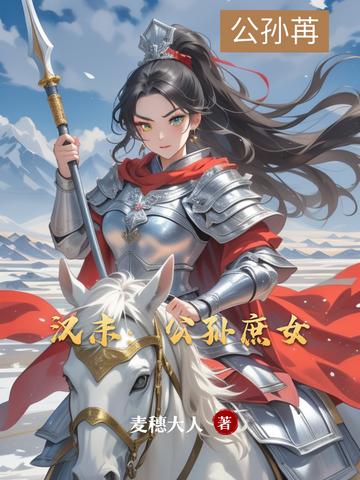





This book takes Gongsun Ran's lonely and courageous growth as the thread, and unfolds a magnificent picture of a heroine in the war of troubled times. From a concubine who was not taken seriously, she refused to marry and left for Mobei at the age of thirteen. She started her family with three thousand horses and drank ice for ten years, which could not cool her hot blood. The tempering on the shores of Lake Baikal made her wear silver armor, white horses and silver spears, becoming the "White Horse Hero" feared by the barbarians, and the "Silver Armor General" admired by the Han army. The author writes vigorously, not only describing the iron-blooded heroism of the battle in Mobei, but also hiding the delicate tenderness of the bond between father and daughter. When 90,000 cavalry came south from Beihai to help their father, it was not only a counterattack in personal destiny, but also a powerful interpretation of "women can also make peace in the world". This is a thrilling legend of the late Han Dynasty, worthy of careful reading by every reader who prefers heroes and female growth in troubled times.