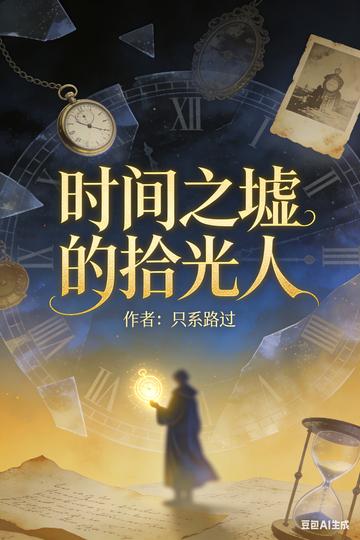
At the end of the Warring States period, a young man named Gu Sheng rescued Xu An, a gravely wounded Zhao clerk, from a mass grave on the Changping battlefield. With his dying breath, Xu An entrusted him with a wish: “Go and see the day the world is at peace for me.”
Gu Sheng agreed. He never imagined it would take two thousand years to fulfill that promise.
He never imagined, either, that from that day on, he would stop aging.
From then on, he took countless names: Gu San in the Qin dynasty, Gu Lang in the Han, Wuhuan during the Wei and Jin, Mute Gu in the Tang, Old Gu in the Song, Gu the Peddler in the Yuan, Dull Gu in the Ming, and Antique Gu in the Qing. Like a scavenger, he wandered the ruins of time, gathering forgotten moments of warmth, yet never daring to truly belong to any era.
Then, in the late Qing dynasty, the blood of a group of young people splashed across his face at an execution ground. Suddenly, he understood: the “peace” he had been searching for had been there all along.