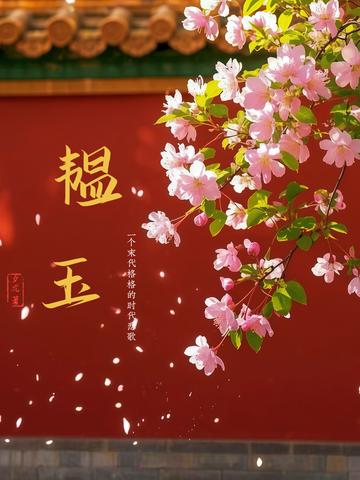
She was born on the Buddha’s birthday, when a flowering crabapple branch snapped. It was an ill omen.
On the eighth day of the fourth lunar month in the twenty-first year of the Guangxu reign, thunder rumbled over Beijing. In the Baylor Mansion, the most splendid branch of a three-hundred-year-old flowering crabapple tree broke off.
The baby girl was born without a cry. She opened her eyes and gazed at a world that was fated to have no place for her.
At twelve, she was sent to Europe.
Before her mother died, she left her a pocket watch. “These walls can’t keep you forever. If you ever get the chance to go out and see the world, then go.”
She saw the bells of Paris, the lecture halls of the Sorbonne, and young people holding forth about revolution and republicanism.
She thought she had gone far enough, far enough to stop being an Aisin Gioro.
When she returned at twenty-four, her homeland had become a republic.
In Beijing, some called her “Miss Luo,” while others cursed her as “a remnant of feudalism.”
The new world demanded she remake herself; the old world wanted her to die alongside it. She stood between them, unable to reach either side.
Years later, she died during a mass movement. Someone trampled the pocket watch on her chest. In its shattered pieces, she could just make out her mother’s face.
The woman those walls could not contain never managed to escape her age.
Her name was Yunyu.
Jade hidden in stone makes the mountain shine. A gem concealed within rock gives the peaks their light.
But no one in this world ever treated her like a gem.
A final princess’s tragic song of an era, and a struggle of love and desire amid the rift between old and new.