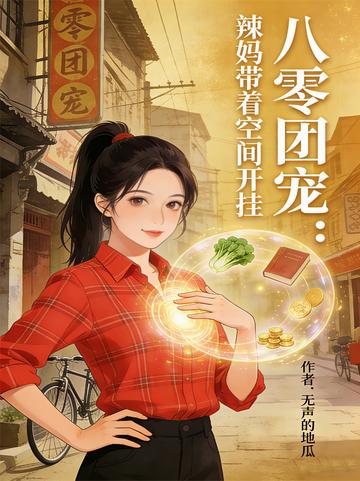
Su Wanwan transmigrates into a period novel as the villainess who abandoned her husband and child.
In the original story, she abuses her stepson and frames the heroine. In the end, her husband sends her to prison, where she dies with no one to claim her body.
When she opens her eyes, wind whistles through the earthen house, and the kang bed is freezing. Her stepson, so thin he is little more than skin and bones, curls up in the corner, trembling. “Mama… don’t hit Xiaobao… Xiaobao will be good…”
Outside, her biased mother-in-law is leading people in to smash down the door and “demand justice” for her grandson.
Su Wanwan looks at the thermometer showing her fever has hit 39.5 degrees, then at the four-year-old who is so hungry he’s chewing tree bark. She turns around and locks the door.
To hell with the plot!
When she finds a dusty jade pendant in a broken wooden cabinet, a flash of white light appears, and a ten-square-meter portable space quietly opens up. A spiritual spring bubbles, the black soil is fertile, and a pile of supply crates from the twenty-first century sits in one corner.
Three months later, villagers notice that Xiaobao, the sickly child from the Gu family who was nearly starved to death, is now chubby and rosy, as if he were a different person.
Six months later, the most popular food stall in the county town is run by the “evil stepmother.”
Three years later, on the opening day of Wanwan’s, the province’s leading restaurant chain, the mother-in-law who once wanted her divorced clutches her leg and sobs, “Wanwan, your mother was blind back then!”
But her disabled husband, who is rumored to become the richest man one day, has been looking at her in a more and more peculiar way.
One night, Gu Changwei corners her in the kitchen and asks hoarsely, “Wanwan, who are you, really?”
Su Wanwan raises a kitchen knife. “I’m your long-lost biological mother!”
Gu Changwei: “…?”