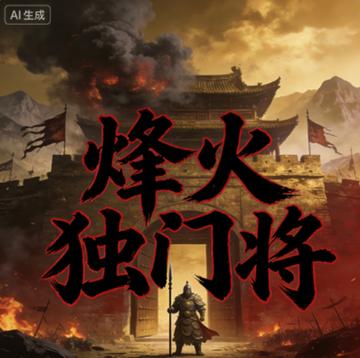
In the fifth year of the Apocalypse, it was cold and windy outside the Great Wall, and the Monolithic Fortress had become abandoned. The hereditary independent general Zhou Feng, with eighty-seven remaining soldiers, guarded the dilapidated military fort and cut off food and wages, facing the fierce front of the Tatar cavalry. The wall collapsed, food was exhausted, and the army was isolated and helpless. The imperial court watched with cold eyes, and the town refused to save the city, leaving only the lonely fort, the remaining soldiers, and an inch of land.
He Kan, a scholar and supervisor, came here with books from saints and sages, but he learned how to survive on the frontier in blood and fire. Zhou Feng used his iron and blood skills to gather the refugees, unite the thieves, dig trenches, and defend his homeland with a death wish; He Kan used pen and ink as a blade to record loyal souls and unite people's hearts. From running out of food and water to uniting as one, from fighting alone to the help of the common people, they used their flesh and blood as a shield to carve a way out in desperate situations, and used perseverance to interpret the true meaning of "one-man general" - the fortress is where the people are, and the country is where the soul is. This is a passionate tragedy for the remnants of the frontier fortress, and it is also a legend of the unity of the army and the people in defending the land.