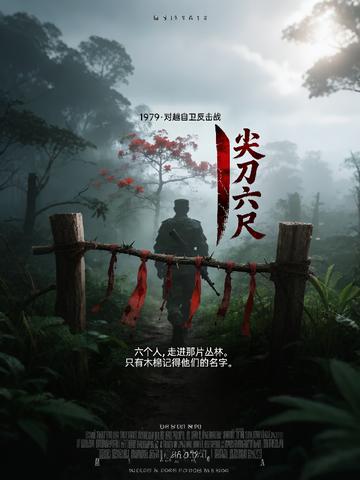
Six people, six red cloth strips, and a jungle waiting there.
In February 1979, 20-year-old Chen Wangshan was selected into the special agent company's penetration team. Together with five other strangers - the silent squad leader, the talkative correspondent, the bad-tempered machine gunner, the student soldier wearing glasses, and the female health worker who always holds a scalpel in her hand - he walked into the fog-shrouded border jungle.
During three days of training before the war, they cleared mines in heavy rain, lay down all night under the siege of mosquitoes, and were bitten by leeches until they were covered in blood. The female health worker hummed a song to encourage them, and the monitor tied the peace charm his wife asked for on everyone's wrist.
Three days later, shots rang out.
After the first murder, the face of the Vietnamese young man, the young man with acne on his face and clutching a family photo in his hand, never left Chen Wangshan's mind. And the soles of his shoes were still stained with that person's blood.
They are sharp knives, sticks to explore the way, and six people who want to blow up the ammunition depot behind enemy lines. No reinforcements, no retreat, no names. If you succeed, it's luck; if you fail, it's a missing person.
On the other side of the boundary river, the sound of cannons was getting closer and closer.
Those twelve kapok trees, two for each person, are just enough to make coffins.
---
This is a story about fear and courage, about strangers becoming brothers on the battlefield. It is written to those who walked into the jungle and never came out, and also to those who came out and never came out in their lifetime.