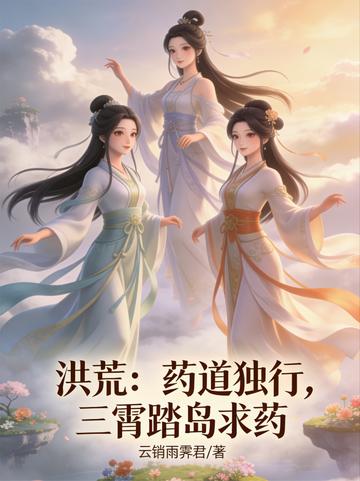
Lu Qing, a top student in the medical school, sacrificed his life fighting the epidemic, and his soul traveled through the ancient human race. He suffered from the plague at a young age and was accepted as a closed disciple by Lu Yue, the god of plague. He practiced hard for fifty-six years, survived three nine thunder tribulations against heaven, and attained the immortal status in the year of Jiazi. He did not follow the popular practice of alchemy, but developed his own way of medicine to achieve immortality. He used the time pearl given by the saint to deeply cultivate the way of medicine, spread out the human race, and gained the merits of Shen Nong. In the prehistoric era when the great catastrophe of becoming a god was approaching, he found his own path to become a medicine god.
Reader comments
So far it looks pretty good. The theme setting is relatively novel, and the key issue is the time span. It's too short. The realm of spiritual practice can be crossed very quickly, but the time span of the Three Sovereigns and Five Emperors is very short. On the contrary, it doesn't look like the prehistoric world, but more like the different planes of the prehistoric parallel world.
Downgrade one star for rigor. The time line of practice is written according to the changes of emperors in the human world, and the time of the change of emperors is a few decades that is particularly close to Chinese history. Rather than the hundreds and thousands of years in myths and legends.
For example, there is a chapter that mentions Zhongkang Taikang, followed by 90 years of practice, and then another 490 winters and summers. You also did some other things, which is equivalent to hundreds of years, but after this you said it was Shaokang. You must know that the distance between Shaokang and Taikang is about a hundred years, and your seclusion and other things have passed for hundreds of years. The previous writing had to follow the timeline of 5,000 years in history. In the middle of writing, do you feel like you are running out of time? He started to cross randomly. Moreover, Shaokang's history can be traced back to about 20 years. It takes you 30 years to write a book.
For this kind of rigorous time line issue, there is no need to write step by step based on the changes in human dynasties in the practice setting. From the very beginning, the cultivation had to be written according to the changes in human dynasties. The span of this cultivation was very large. Later, the time for changes in cultivation gradually became longer, but the changes in human dynasties slowed down.
That's all. After 100 chapters, I realized that he is still a scumbag.
A rare and excellent book, with its own understanding and new things, and not just copying it mechanically.
So far it looks pretty good. The theme setting is relatively novel, and the key issue is the time span. It's too short. The realm of spiritual practice can be crossed very quickly, but the time span of the Three Sovereigns and Five Emperors is very short. On the contrary, it doesn't look like the prehistoric world, but more like the different planes of the prehistoric parallel world. Downgrade one star for rigor. The time line of practice is written according to the changes of emperors in the human world, and the time of the change of emperors is a few decades that is particularly close to Chinese history. Rather than the hundreds and thousands of years in myths and legends. For example, there is a chapter that mentions Zhongkang Taikang, followed by 90 years of practice, and then another 490 winters and summers. You also did some other things, which is equivalent to hundreds of years, but after this you said it was Shaokang. You must know that the distance between Shaokang and Taikang is about a hundred years, and your seclusion and other things have passed for hundreds of years. The previous writing had to follow the timeline of 5,000 years in history. In the middle of writing, do you feel like you are running out of time? He started to cross randomly. Moreover, Shaokang's history can be traced back to about 20 years. It takes you 30 years to write a book. For this kind of rigorous time line issue, there is no need to write step by step based on the changes in human dynasties in the practice setting. From the very beginning, the cultivation had to be written according to the changes in human dynasties. The span of this cultivation was very large. Later, the time for changes in cultivation gradually became longer, but the changes in human dynasties slowed down. That's all. After 100 chapters, I realized that he is still a scumbag.
A rare and excellent book, with its own understanding and new things, and not just copying it mechanically.