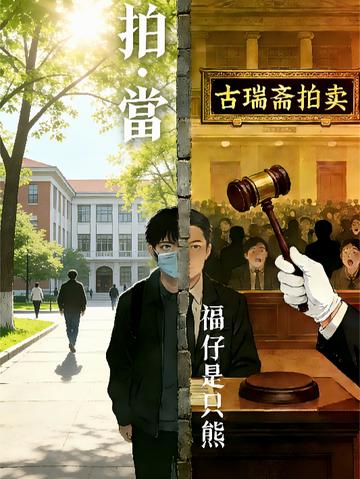
The spring of 2003 came late, with SARS wandering in the streets like a ghost, the smell of disinfectant filling the air, and masks covering expressions, building invisible walls between people. On the Jiangyuan University campus, there are few people on Wutong Avenue, and the students' eyes are filled with confusion and confusion.
At the other end of the city, inside the building with the signboard "Guruizhai Auction", it was a different scene. The auctioneer's white gloves and date mallet construct a solemn theater about wealth and history. When the hammer goes up and down, there is the flow of huge amounts of money, and it is also the secret delivery of countless desires.
The epidemic has brought economic stagnation and also caused undercurrents of assets. Auctions have become the most honorable cover for some stories—the real battle is always before the sound of the hammer: Is the circulation of a cultural relic clear? What kind of human network is behind a commission? Here, the boundary between "authenticity" and "falsehood" may become ambiguous as experts look at it, and be quietly reshaped in the face of interests.
The campus is full of youthful hesitation, and ancient and new game rules are running outside the wall. The epidemic is like a magnifying glass, which not only reveals the fragility of life, but also illuminates the context that is usually hidden in the dark. If a young man wants to cross this wall, he needs to learn far more than just identifying objects, he also needs to identify the motivation behind the smiling face under the light - to find his own foothold between the dignity represented by the "white gloves" and the gray area behind the curtain. The young people who are about to step into this place will eventually embark on a more difficult journey of identifying artifacts and identifying human hearts.