[Demining Guide]: 1. The modern protagonist has tool-human attributes, and everything serves the development of the Ming Dynasty; 2. The plot needs to advance the establishment time of Jinyiwei, and the novel is not official history and does not need to be verified; 3. If you like it, you are welcome to stay; if you don't like it, don't force it, just quit.
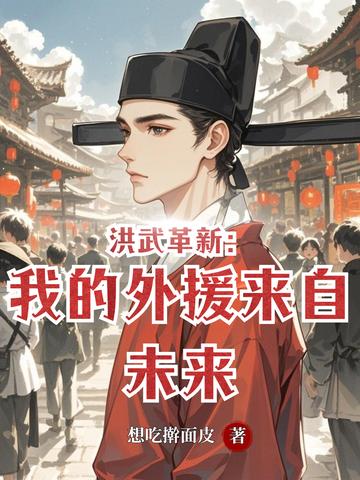
Yan Yue, a modern food stall owner, set up a starch sausage + egg cake stall in the scenic spot. He wanted to make some pocket money, but he was waiting for a mysterious guest wearing Ming Dynasty uniforms and an extraordinary bearing.
Mistaking Prince Zhu Biao for Zhu Gaochi, his mouth is faster than his brain——
The sentence "Zhu Di will be in peace sooner or later" shattered the guests' perception;
Another sentence, "The rise and fall of later generations and the replacement of dynasties" overturns the trend of history;
Even the high-yielding grains, elite weapons, and advanced artillery that could save the people and strengthen the country were all casually dismissed by him as idle chatter.
A starchy intestine and a mouth without a door directly spoil the future of Ming Dynasty from beginning to end.
When the modern prophet bumps into the still-dead Ming Prince, the world will be completely changed!
Reader comments
It is very suitable for listening to books. I listened to the rice drama for two days and it was very interesting. At first I thought the comment section was a bit noisy and I was worried, but I think it's not a big deal after it's tied. The loopholes in farming are understandable and don't affect the viewing. The author probably didn't follow the history completely in the timeline, but the novel doesn't matter. If I want to take it as an official historical textual research, I won't read the novel.
But! I've been looking forward to Judy getting beaten since the first dozen chapters! I've been tying up and still looking forward to it, update soon! It would be great if there were ten chapters in one day
It's not bad. It's well written. There's no other novel in which the protagonist is so messed up that he can't figure out who the other person is for half a year.
The age of porcelain and jade is also well written. The jade is very new. The key is written here.
Some people may say that new jade can still be so valuable, but I think it is reasonable. After all, the jade is real and there is carving craftsmanship. Even if it is new, there will always be people who like it if the craftsmanship is there.
I have seen the latest chapter now, and the next step is to check the paintings, looking forward to the follow-up,
It is quite interesting and suitable for book lovers with a little basic knowledge. The latest chapter about Hongwu Zhengyun and Pinyin shows that the author has checked the information and specifically proposed the Fanqie method. Indeed, there are obvious flaws in the Fanqie method. The choice of upper and lower characters is arbitrary, and the changes in pronunciation of ancient and modern dialects will lead to confusion in spelling. The same character Fanqie may be different in different rhyme books. To learn Fanqie, you need to master the pronunciation of thousands of commonly used Chinese characters. Therefore, the book that the protagonist brings to Zhu later is the most useful from my perspective. Literacy learning is the beginning of all development. To develop the Ming Dynasty, it certainly cannot be completed by a few princes, nobles and officials.
The writing is quite interesting. In the first few chapters I thought it was a food article, but later on it was more about the Ming Dynasty. The words and sentences are very old-fashioned, and the tone and feeling of Zhu Biao and Lao Zhu's speech are very precise and not stiff. There is no procrastinating part where the identity cannot be revealed for a long time, and it is very comfortable to watch.
Someone in the comment area said that it contains some content related to family ethics. I am not disgusted with it. I am very curious whether these will be related to the main plot later.
A small drawback is that the overall pace is a bit slow. Occasionally I feel that it is not advancing fast enough. I have caught up with the latest chapter and look forward to more updates.
I have read the latest chapter. I am praising the highlights. The part about promoting the Potato Army was well written. Lao Zhu was not described as a tyrant who was always shouting and killing, killing nine tribes. He personally went to see people digging potato seedlings to calculate the seedlings, personally arranged who should plant them where and who should be responsible for planting them. He also considered how to find ways to prevent officials from seeking personal gain with power. What he presented was a very good and perfect image of a king who could fight, farm and serve the people.
There is also Zhu Biao, who deserves to be called the perfect prince. His performance is very lovable, he can really come up with ways to benefit the country and the people, and he has the majesty of an elder brother. The part where he beats Zhu Cang and Zhu Biao is so enjoyable. The elder brother teaches his younger brother, every word is heartbreaking.
So far, the writing seems to be pretty good, and it's one of the more rigorous ones in Tomato. One of the passages contains a very clever point: after the ancients received products and knowledge that transcended their times, they did not recklessly accept them all, but modified and promoted them according to local conditions. I hope the author can continue to maintain this advantage in the future. Don't be like some historical texts, thinking that you can add buffs by bringing out the systems of later generations. Many systems were actually proposed to adapt to the economy and actual conditions at that time. Using them rashly in advance can easily cause more harm than good. Moreover, some frequent reformers in historical texts actually do more harm than good in real history. (For example, this system, the one-whip law and the two-tax law, are actually tax-bundled reforms. Many people have been misled by TV dramas and marketing accounts, thinking that this system is very different from the previous dynasties, thinking that it benefits the country and the people, but in fact it benefits the country and disadvantages the people. It is easy to accumulate the harm that cannot be reversed, resulting in what appears to be a reduction in short-term burdens, but will soon turn into a disguised tax increase. For detailed authors, you can look at Huang Zongxi's Law summarized by scholar Qin Hui.)
I rarely read stories about male protagonists, but after reading them, I thought they were pretty good. The protagonist's personality is very likable. He doesn't treat the ancients as fools, and he doesn't have the feeling of being superior and looked down upon by everyone. He is just a very high-quality and normal kind of person. He has no other problems except that he loves money. I will give you five stars to encourage you. I hope it will be a long story.
Real and objective, true-dimensional description, clear structure. It can help more book friends.
The author's writing is quite good. Although the writing style is a little immature, the plot structure is good and has the characteristics of refreshing writing. It is quite comfortable to read. The writing style can be improved. It is worth a read!
Generally speaking, it is very good. The plot design is very good and novel. It is not a nonsense novel. I was almost persuaded by the title of the book at the beginning. I suggested that the author change his name. Nowadays, the image of fat people in TV series and novels is deeply rooted in the hearts of the people. There must be many people who think that Zhu Gaochi is so fat. How can he admit his mistake? In fact, the first few generations of the Zhu family were fat, and the middle and later generations were the thin ones.
The author has some stuff, the history is pretty good. To be honest, the first 50 chapters are the same as similar ones on the market. A cute food scene or Zhu Di's famous scene is used as a hook to attract readers. The latter part is more innovative, especially the part about Hu Weiyong. The people in the court just want to use power to write privately. It is very real. No matter how many saints are recorded, the first reaction when seeing something beyond the era is definitely whether it can be used for oneself. The author has handled it very well here, and the quality will not be bad if it continues.
The character's personality and behavior are well controlled, and they don't fall into clichés. Especially when Lao Zhu gets modern things, he doesn't believe them and use them immediately. In many books, the protagonist takes something and the ancients are grateful and immediately believe it and use it directly, without considering whether it is in line with the actual situation at that time [smile]
Very good, very good. Zhu Di's handling of this part is very good and reasonable. He did not choose to directly tell him the future history and then go up and beat him up. Instead, he reasonably used his abilities to let him hone. He suggested that he be sent to America or Europe in the future, and then establish the Mingqiu.
It's very well written. The setting and plot are very good. It's not a modern novel disguised as ancient times. It's quite real. I would do the same thing if I were the protagonist.
It's so miserable that it attracted a lot of professional negative reviewers, as well as tomato historians. To be honest, those who traveled back in time may not be able to remember all the details. How can some people be sure that the version they know is the absolute truth? If you pursue 100% restoration of historical facts, it is more appropriate to study academic monographs. There is really no need to use the standards of official history to harshly criticize novels.
Not bad, not bad, the idea is quite new, the TV series has stereotyped people. I always thought Zhu Biao was thin, but after checking, I found out that he is also fat. He looks so similar to Zhu Gaochi. His fate has been copied.
Yes, it's not stupid. The protagonist's role is slightly less, but the character design is a plus. He is not greedy for petty advantages and is not condescending. However, at the beginning, the protagonist failed both the public and postgraduate entrance examinations. I really want to break my defense, because I also
So far, it's well written!
The author has something, it's not simple
It looks good and is well written, so cheers!
Overall, it's not bad. The flaws don't hide the good points. It's worth pursuing. The writing style is quite delicate. It is recommended to use the big ship sponsored by Chen Youliang to mine on the other side of the sea in the future.
The plot is okay, it's rare for Tomato to be rigorous, but the new book is not enough to read [laughing]
Good, good, good
Very good very good
Not bad, the story is interesting
It was quite interesting to write.
Beautiful, I like it very much
Hahaha, I laughed to death. The process was all right, but the result was all wrong. The words used to describe Zhu Laosi fit perfectly with Lao Zhu [laugh][laugh][laugh]
It feels like a real person. Hahahaha, I feed pregnant women with skewers and make all the snacks for my children. Why is he so fat? Only he knows the spicy and delicious food along the way.
It's so beautiful, especially the part about King Qin Zhu Ping
[Shy][Shy][Shy]Good-looking, good-looking, good-looking, good-looking, like it
It's super good-looking. I was so greedy at the beginning that I wanted to eat the sausage right away. The author must not stop updating it🙄🙄🙄
I'm sorry for the quality of the book, please give it a try, author.
It is very suitable for listening to books. I listened to the rice drama for two days and it was very interesting. At first I thought the comment section was a bit noisy and I was worried, but I think it's not a big deal after it's tied. The loopholes in farming are understandable and don't affect the viewing. The author probably didn't follow the history completely in the timeline, but the novel doesn't matter. If I want to take it as an official historical textual research, I won't read the novel. But! I've been looking forward to Judy getting beaten since the first dozen chapters! I've been tying up and still looking forward to it, update soon! It would be great if there were ten chapters in one day
It's not bad. It's well written. There's no other novel in which the protagonist is so messed up that he can't figure out who the other person is for half a year. The age of porcelain and jade is also well written. The jade is very new. The key is written here. Some people may say that new jade can still be so valuable, but I think it is reasonable. After all, the jade is real and there is carving craftsmanship. Even if it is new, there will always be people who like it if the craftsmanship is there. I have seen the latest chapter now, and the next step is to check the paintings, looking forward to the follow-up,
It is quite interesting and suitable for book lovers with a little basic knowledge. The latest chapter about Hongwu Zhengyun and Pinyin shows that the author has checked the information and specifically proposed the Fanqie method. Indeed, there are obvious flaws in the Fanqie method. The choice of upper and lower characters is arbitrary, and the changes in pronunciation of ancient and modern dialects will lead to confusion in spelling. The same character Fanqie may be different in different rhyme books. To learn Fanqie, you need to master the pronunciation of thousands of commonly used Chinese characters. Therefore, the book that the protagonist brings to Zhu later is the most useful from my perspective. Literacy learning is the beginning of all development. To develop the Ming Dynasty, it certainly cannot be completed by a few princes, nobles and officials.
The writing is quite interesting. In the first few chapters I thought it was a food article, but later on it was more about the Ming Dynasty. The words and sentences are very old-fashioned, and the tone and feeling of Zhu Biao and Lao Zhu's speech are very precise and not stiff. There is no procrastinating part where the identity cannot be revealed for a long time, and it is very comfortable to watch. Someone in the comment area said that it contains some content related to family ethics. I am not disgusted with it. I am very curious whether these will be related to the main plot later. A small drawback is that the overall pace is a bit slow. Occasionally I feel that it is not advancing fast enough. I have caught up with the latest chapter and look forward to more updates.
I have read the latest chapter. I am praising the highlights. The part about promoting the Potato Army was well written. Lao Zhu was not described as a tyrant who was always shouting and killing, killing nine tribes. He personally went to see people digging potato seedlings to calculate the seedlings, personally arranged who should plant them where and who should be responsible for planting them. He also considered how to find ways to prevent officials from seeking personal gain with power. What he presented was a very good and perfect image of a king who could fight, farm and serve the people. There is also Zhu Biao, who deserves to be called the perfect prince. His performance is very lovable, he can really come up with ways to benefit the country and the people, and he has the majesty of an elder brother. The part where he beats Zhu Cang and Zhu Biao is so enjoyable. The elder brother teaches his younger brother, every word is heartbreaking.
So far, the writing seems to be pretty good, and it's one of the more rigorous ones in Tomato. One of the passages contains a very clever point: after the ancients received products and knowledge that transcended their times, they did not recklessly accept them all, but modified and promoted them according to local conditions. I hope the author can continue to maintain this advantage in the future. Don't be like some historical texts, thinking that you can add buffs by bringing out the systems of later generations. Many systems were actually proposed to adapt to the economy and actual conditions at that time. Using them rashly in advance can easily cause more harm than good. Moreover, some frequent reformers in historical texts actually do more harm than good in real history. (For example, this system, the one-whip law and the two-tax law, are actually tax-bundled reforms. Many people have been misled by TV dramas and marketing accounts, thinking that this system is very different from the previous dynasties, thinking that it benefits the country and the people, but in fact it benefits the country and disadvantages the people. It is easy to accumulate the harm that cannot be reversed, resulting in what appears to be a reduction in short-term burdens, but will soon turn into a disguised tax increase. For detailed authors, you can look at Huang Zongxi's Law summarized by scholar Qin Hui.)
I rarely read stories about male protagonists, but after reading them, I thought they were pretty good. The protagonist's personality is very likable. He doesn't treat the ancients as fools, and he doesn't have the feeling of being superior and looked down upon by everyone. He is just a very high-quality and normal kind of person. He has no other problems except that he loves money. I will give you five stars to encourage you. I hope it will be a long story. Real and objective, true-dimensional description, clear structure. It can help more book friends.
The author's writing is quite good. Although the writing style is a little immature, the plot structure is good and has the characteristics of refreshing writing. It is quite comfortable to read. The writing style can be improved. It is worth a read!
Generally speaking, it is very good. The plot design is very good and novel. It is not a nonsense novel. I was almost persuaded by the title of the book at the beginning. I suggested that the author change his name. Nowadays, the image of fat people in TV series and novels is deeply rooted in the hearts of the people. There must be many people who think that Zhu Gaochi is so fat. How can he admit his mistake? In fact, the first few generations of the Zhu family were fat, and the middle and later generations were the thin ones.
The author has some stuff, the history is pretty good. To be honest, the first 50 chapters are the same as similar ones on the market. A cute food scene or Zhu Di's famous scene is used as a hook to attract readers. The latter part is more innovative, especially the part about Hu Weiyong. The people in the court just want to use power to write privately. It is very real. No matter how many saints are recorded, the first reaction when seeing something beyond the era is definitely whether it can be used for oneself. The author has handled it very well here, and the quality will not be bad if it continues.
The character's personality and behavior are well controlled, and they don't fall into clichés. Especially when Lao Zhu gets modern things, he doesn't believe them and use them immediately. In many books, the protagonist takes something and the ancients are grateful and immediately believe it and use it directly, without considering whether it is in line with the actual situation at that time [smile]
Very good, very good. Zhu Di's handling of this part is very good and reasonable. He did not choose to directly tell him the future history and then go up and beat him up. Instead, he reasonably used his abilities to let him hone. He suggested that he be sent to America or Europe in the future, and then establish the Mingqiu.
It's very well written. The setting and plot are very good. It's not a modern novel disguised as ancient times. It's quite real. I would do the same thing if I were the protagonist. It's so miserable that it attracted a lot of professional negative reviewers, as well as tomato historians. To be honest, those who traveled back in time may not be able to remember all the details. How can some people be sure that the version they know is the absolute truth? If you pursue 100% restoration of historical facts, it is more appropriate to study academic monographs. There is really no need to use the standards of official history to harshly criticize novels.
Not bad, not bad, the idea is quite new, the TV series has stereotyped people. I always thought Zhu Biao was thin, but after checking, I found out that he is also fat. He looks so similar to Zhu Gaochi. His fate has been copied.
Yes, it's not stupid. The protagonist's role is slightly less, but the character design is a plus. He is not greedy for petty advantages and is not condescending. However, at the beginning, the protagonist failed both the public and postgraduate entrance examinations. I really want to break my defense, because I also
So far, it's well written!
The author has something, it's not simple
It looks good and is well written, so cheers!
Overall, it's not bad. The flaws don't hide the good points. It's worth pursuing. The writing style is quite delicate. It is recommended to use the big ship sponsored by Chen Youliang to mine on the other side of the sea in the future.
The plot is okay, it's rare for Tomato to be rigorous, but the new book is not enough to read [laughing]
Good, good, good
Very good very good
Not bad, the story is interesting
It was quite interesting to write.
Beautiful, I like it very much
Hahaha, I laughed to death. The process was all right, but the result was all wrong. The words used to describe Zhu Laosi fit perfectly with Lao Zhu [laugh][laugh][laugh]
It feels like a real person. Hahahaha, I feed pregnant women with skewers and make all the snacks for my children. Why is he so fat? Only he knows the spicy and delicious food along the way.
It's so beautiful, especially the part about King Qin Zhu Ping
[Shy][Shy][Shy]Good-looking, good-looking, good-looking, good-looking, like it
It's super good-looking. I was so greedy at the beginning that I wanted to eat the sausage right away. The author must not stop updating it🙄🙄🙄 I'm sorry for the quality of the book, please give it a try, author.