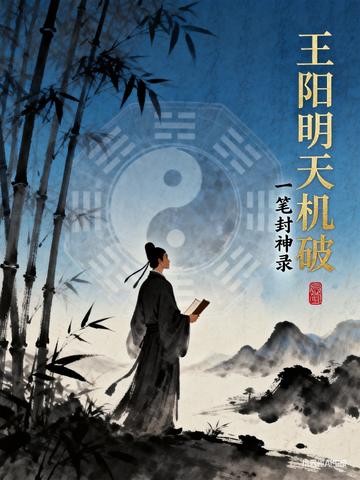
Introduction to "Wang Yangming: The Secret of Heaven"
He was five years old and silent. On his wedding night, he abandoned his bride and sat down with a Taoist priest for a thorough talk. He stood up for his righteousness and was punished by the imperial staff forty years and was banished to thousands of miles. He realized Taoism in a desperate situation in a sarcophagus in Longchang, Guizhou, and opened the door to spiritual learning. He never led an army, but he quelled King Ning's 100,000 rebels in forty-three days. Before his death, his disciples asked him if he had any last words. He only said: "My heart is bright, so what else can I say?"
He is Wang Yangming, one of the very few saints in Chinese history who has achieved the three immortal things of "establishing virtue, meritorious service, and establishing words".
This book presents a panoramic view of Wang Yangming's ups and downs life: from his childhood in Ruiyun Tower, Yuyao, to the turbulent officialdom of the capital; from his desperate enlightenment in Longchangyi, to the blood-and-fire conquest in the southern Gansu mountains; from the life-and-death duel on Poyang Lake, to his deathbed Dharma transmission on Tianquan Bridge. Here are the arrogance and confusion of youth, the difficulties and responsibility of middle age, and the harmony and compassion of old age. There is a duel between good and evil with a powerful traitor, a life-and-death game with a traitor to the king, a heart-to-heart relationship with a best friend, and a passion for passing on the fire with a disciple.
But ultimately, this is a story about "you". Because Wang Yangming said: "The streets are full of saints." He proved one thing: no matter what situation a person is in, he can live upright and upright with the light in his heart.
Using historical materials as bones and literature as flesh, we can restore a Wang Yangming with flesh and blood, laughter and tears. Dedicated to everyone who has ever been in trouble and asked "Where should I go?"
Reader comments
The unity of knowledge and action leads to conscience, the way of the sage, my nature is self-sufficient
The unity of knowledge and action leads to conscience, the way of the sage, my nature is self-sufficient