If the price of staying alive were to write someone else's name on a list of people to abandon, would you sign it?
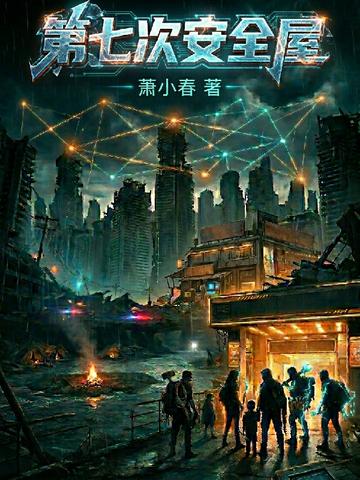
After the Black Rain fell, unknown rules cleaved the entire city apart. The power went out, bridges collapsed, communications failed, and one shelter after another fell. Rumor had it that only those who found the "Seventh Safehouse" could secure seven days of stability. But Lin Yan soon discovered that the so-called safehouse was never an answer for everyone. It was a ruthless selection system: if some people were to be protected, others had to be excluded.
Lin Yan had once proposed a rescue plan that required no abandonment list, but it was rejected, altered, and buried deep in the old System. Now that disaster had returned, he no longer trusted central dispatch, nor did he believe the pretty words about "sacrificing a few to save the many." Leading a group of people the System had marked as low priority, he held on to an abandoned shopping mall, reconnected the hospital, schools, North Station, and the riverside outskirts, and gradually wove seven mutually connected nodes through the collapsing city.
But the real enemy wasn't the disaster itself. It was the people convinced that selection was the only way to maintain order. Shen Ce wanted efficiency and results, a list that could quickly stabilize the city. Lin Yan wanted to prove that safety could be built without handing over a single name.
When the white lights on the far bank came on, a new distress signal arrived:
"We refuse to submit a list, too."
The Seventh Safehouse wasn't a building.
The seventh safehouse was humanity's seventh attempt to define safety, and the first time no one was simply abandoned by default.