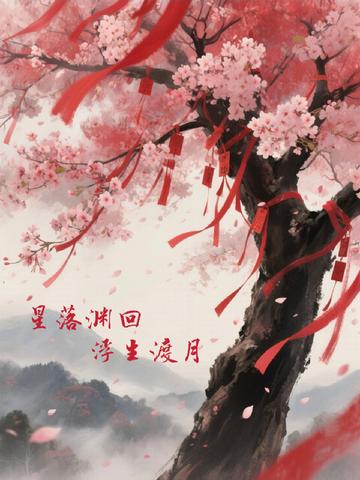
Stars Fall into the Abyss and Return to Floating Life to Cross the Moon
星落渊回浮生渡月
- Status
- Ongoing
- Length
- 326k Words
- Genre
- Ancient Romance
- Subgenre
- Ancient-Style Life
- Audience
- Female
- Updated
- 2mo ago
- Source
- Fanqie
Stats
1Reads
71Chapters
66Reads · all time

She climbed out of the abyss, not for revenge, but to pull up those who were still crying in the abyss one by one. After traveling three times, she died at the hands of the same man each time. The fourth time she smiled - not because she became black, but because she finally understood the solution to the game. Su Jinmai wrote time travel as a philosophical proposition: gentleness is not nature, but a choice after scars have scabbed; saving others is not compassion, but the only way to save oneself. There is no golden finger, no hero to save the situation, she is the only one capable of thousands of troops. After reading the third chapter, I started taking crazy screenshots. After reading the ending, I couldn't sleep at three in the morning - it turns out that each of us is a sleeper who needs to be awakened, and she turned herself into the moon.
This ancient romance novel is set in (Dynasty/Imaginary) and tells the ups and downs of the emotional entanglement between (the identity of the female protagonist) and (the identity of the male protagonist). The author's writing style is exquisite, and he pays great attention to the study of ancient etiquette, clothing, and architecture, making readers feel like they are in that distant era. The female protagonist is not a weak woman in the traditional sense. She (character characteristics) strives to control her own destiny in a feudal environment where men are superior to women. The male protagonist is (character characteristics). From (first encounter) to (emotional development), the relationship between the two people progresses layer by layer, which is touching. What is particularly rare is that in addition to romance, the novel also incorporates elements such as (power plot/house fight/jianghu/family and country). The plot is compact and suspenseful, and it is by no means just sweet. The supporting characters also have flesh and blood, and are not just mere tools. Of course, the work has slight flaws (pacing/post-plot), but the flaws are not outweighed. Overall, this is an excellent ancient Chinese novel that is worth savoring and is suitable for readers who like (genre tags). This is a book that makes people cry and take crazy screenshots. Su Jinmai did not give any golden fingers to the heroine, and she stepped on the tip of a knife every step she took - time travel is not a gift, but a curse; gentleness is not nature, but a choice after the scars have scabbed. The suspense thread is buried so deeply that you thought you were watching one person's redemption, but only halfway through did you realize it was the "symbiosis" of a group of people. Those metaphors about "crying and laughter" will suddenly hit your heart like a dull punch after reading the second half: It turns out that each of us is a sleeper that needs to be awakened. If you are tired of the routine time travel novels, this book will give you a bloody but bright answer.
The heroine returns from the abyss, hides all the pain in her body, uses medical skills to heal people, and pursues the forgotten past in the mist. Gentleness turns into armor, loneliness turns into a sharp sword, saving the common people and finding oneself go hand in hand. The writing style is quaint and elegant, and the words are full of a sense of fate. The story contains both the tenderness of the doctor's kindness and the sadness that spans time and space. In the compassion and healing, it outlines a touching ancient love story.
The characters in this novel are well drawn! The story is full of ups and downs, cleverly conceived, and very exciting!