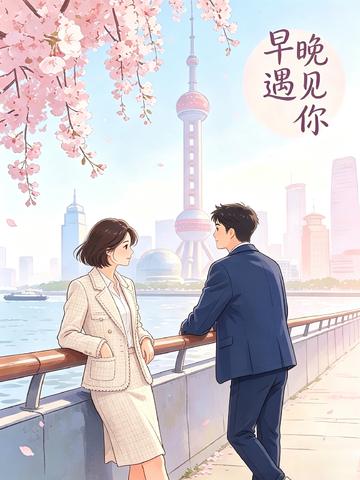
In the spring of her thirty-sixth year, Shen Wan gazed tenderly at a man eight years younger than herself beneath a cherry tree.
She was a marketing director at a foreign-owned company and had been divorced once. He was a technical co-founder of a startup, with Camus on his bookshelf and an unsettling clarity in his eyes. She thought this was only a brief interlude, so she slipped away quietly at dawn.
But he didn’t let her go.
“I’m serious,” he said.
From cherry blossoms to sweet osmanthus, from Shanghai to Hangzhou, from project bids to the interrogation room at the Public Security Bureau: her ex-husband was suspected of financial crimes, and she was drawn into the investigation. She insisted on staying in Shanghai, yet became a migratory bird commuting by high-speed rail. She thought love was icing on the cake, only to discover that in her most wretched moments, it was the one thing that refused to let go.
While she was making pottery, he told her, “People aren’t clay. As long as your mind doesn’t grow rigid, you can always be reshaped.”
On a night boat on West Lake, he told her, “Freedom isn’t about choosing the perfect option. It’s about being able to face every problem after you’ve made your choice.”
He took the earliest high-speed train and came to her apartment building. “I want to see the city where you work and have breakfast with you.”
This is a story about choices: whether to leave or stay, to compromise or hold firm.
It’s a story about freedom: freedom isn’t somewhere far away. It lies in how we live with our desires, and whether we dare to choose a life that defies definition.