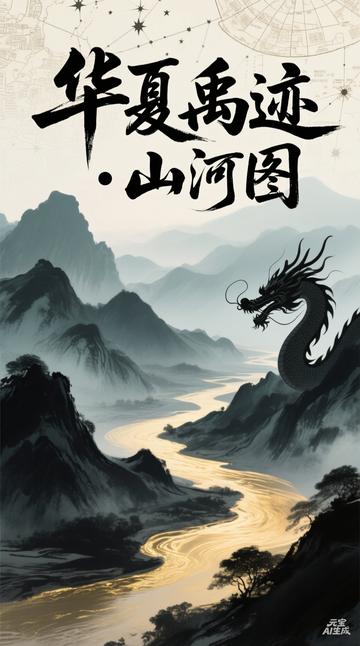
In the first year of Yongxing during the Western Jin dynasty (304 CE), Li Xiong, leader of the Di people, established the Cheng Han regime in Bashu. Amid turbulent times, Shen Yan, a young compiler of geographical gazetteers, is ordered to survey the borders of the fledgling regime and compile maps and records. Drawing on family secrets passed down through generations and his deep understanding of ancient texts such as the Records of Huayang, he gradually uncovers the heart of the ancient Shu civilization, buried beneath the Chengdu Plain: a collection of bronze relics tied to rituals honoring heaven and earth and the transfer of royal power. Meanwhile, the Cheng Han royal family, refugee leaders, local clans, and even reclusive shamans all covet the relics. Forced to navigate between them, Shen Yan is swept into a vortex of recording the geography of the present and decoding the truths of antiquity, becoming the key that connects two eras. Ultimately, the story asks: When the mountains and rivers “speak” again after a thousand years of silence, how can an individual preserve the truth of history and the continuity of culture amid a rupture in civilization and the tides of political power?