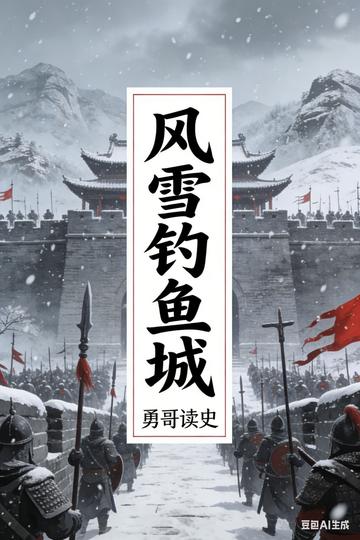
The novel takes Diaoyu City's thirty-six-year defense of the solitary city as its sutra and the psychological journey of four generations of guards, Yu Jie, Wang Jian, Zhang Jue and Wang Li, as its weft, and weaves a bloody picture of the Sichuan-Chongqing Anti-Japanese War in the late Song Dynasty - not only the war legend of "God breaks his whip", but also the choices of human nature and the ups and downs of fate in troubled times.
Abandoning the stereotyped dichotomy between loyal and traitor, each historical figure is allowed to live in a specific situation: Yu Jie's heroic strategy and grief in his later years, Wang Jian's staunch courage and political naivety, Zhang Jue's perseverance and ultimate despair, and even Wang Li's critical burden when he surrendered to the city. The Meng Yuan side also did not demonize the story. Meng Ge's heroic ambition, Wang Dechen's professional military temperament, and Kublai Khan's political strategy all strived to be flesh-and-blood.
It adopts multi-perspective narration, with Song characters as the main line, and moderately interspersed with Mongolian and Yuan perspectives to form dialogue and tension. Each volume sets a core conflict, and each chapter maintains an independent narrative unit while promoting the overall process.