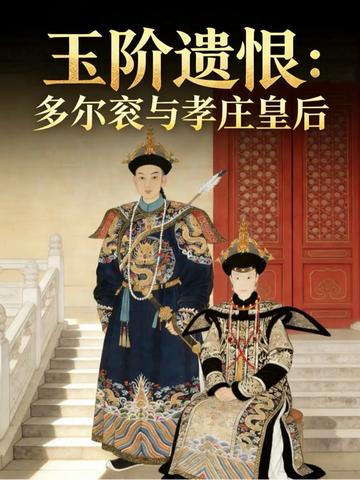
This book takes the events of the first hundred years of the Qing Dynasty as its volume and depicts the magnificent life of Empress Bumubutai (Dayu'er) of Xiaozhuangwen. From a young girl on the Horqin grassland, she became the concubine of Huang Taiji. In the desperate situation of her husband's sudden death and the impending death of her youngest son, she formed a political alliance with her powerful uncle Dorgon to jointly protect the Qing Dynasty from taking over the Central Plains. The two were dependent on each other at the peak of power, checking and balancing each other in the entanglement of love and hate, and the rumor of "the Queen Mother getting married" has become an eternal mystery. As Shunzhi came to power and Kangxi succeeded to the throne, Xiaozhuang used his extraordinary wisdom to set the stage behind the scenes, assisted two generations of young emperors, and laid the foundation for the prosperous era of Kangxi and Qianlong. However, he was burdened with complicated feelings and historical disputes with Dorgon, and lived a legendary life. This is an epic about women's survival, competition and transcendence in the whirlpool of power. It deeply explores the complex aspects of love, politics and historical memory.
Explanation on "Dayu'er" and "Bumu Butai"
• Bumbutai: It is the real name of the protagonist, which means "noble person descended from heaven" in Mongolian. This is the name used in historical sources (such as Mongolian archives) and on formal occasions.
• Dayu'er: better known, but often seen in unofficial history and literary and opera interpretations. It may be the Chinese nickname or folk nickname of "Bumu Butai", not its official historical name.
• Empress Xiaozhuangwen: This is the posthumous title given by her grandson Emperor Kangxi, and is usually called this by future generations.
In this book, different titles will be used according to different stages of their lives.
In the Mongolian grasslands and the newlywed period: Bumbutai.
In court life: In order to be close to literary communication, Da Yuer was used.
After becoming the Queen Mother or the Queen Mother: use the title Xiaozhuang.