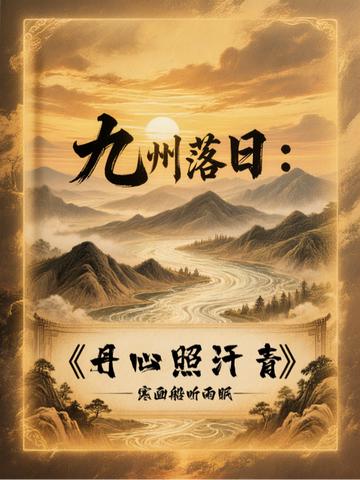
With the core theme of "loyalty reflects history", it explores the relationship between personal destiny and the torrent of history. A large number of historical elements have been incorporated - the Jingkang Incident, Yue Fei's Northern Expedition, Fengbo Pavilion, the Battle of Caishiji, the Jin Kingdom's capital relocation, the rise of Mongolia, the Yashan Naval Battle... These historical events are not simple backgrounds, but key nodes that promote the fate of the characters. Zhao Wumian spent his whole life painting the country, and finally discovered that "the country is not in the painting, but in the heart" - those people he has loved and those who have waited for him are his Kyushu. This theme runs throughout the book and is perfectly sublimated at the end.
The work adopts a multi-line narrative, with two main lines, the north and the south, running in parallel and finally intersecting at the end. The time span spans one hundred and fifty-two years from the Jingkang Incident (1127) to the Yashan Naval Battle (1279), but the continuity of the narrative is maintained through the intergenerational inheritance of the characters.
This is a work about persistence and waiting, as well as a work about love and memory. Zhao Wumian spent his whole life painting the country, and finally discovered that the country is in his heart. And when we read this story, we will also leave a picture in our hearts - there is snow, rain, mountains, water, and those we loved in the picture.
The green mountains remain unchanged and the green water flows forever. A loyal heart, according to my history.