“He transmigrated three years ago and kept his secret well. Until one night, Zhuge Liang asked him: Why can your eyes see through everything?”
On the first day after transmigrating into the body of a prisoner, he met Zhuge Liang.
Not the immortal with a feather fan and silk headdress from the books, but a middle-aged man with graying temples who ate millet rice with pickled vegetables. His eyes were bright, bright enough to see through a person’s heart.
“What’s your name?”
“A Shou.”
“What can you do?”
“…I can read.”
He didn’t dare tell the truth.
He didn’t dare say he came from eighteen hundred years in the future.
He didn’t dare say he knew how this war would end.
But he had no idea that from that moment on, those eyes had been fixed on him.
In the supply camp, he used modern mathematics to make sense of the ledgers.
In the central command tent, he used historical records to deduce the enemy’s plans.
By the Lushui River, one remark from him persuaded Wang Ping to personally lead a force out to scout the route.
He thought he’d hidden his secret well.
Until one night, Zhuge Liang summoned him alone.
“How did you know about that trail?”
“An old man in the village told me.”
“Which village? Which old man? What was his name?”
He couldn’t answer.
The tent was so quiet he could hear the wick burning.
Zhuge Liang looked at him, his gaze as deep as water with no visible bottom.
Then the great statesman, famed throughout history, smiled.
“A Shou,” he said, “do you know you have a tell?”
His heart clenched.
“Your left eyelid twitches when you lie.”
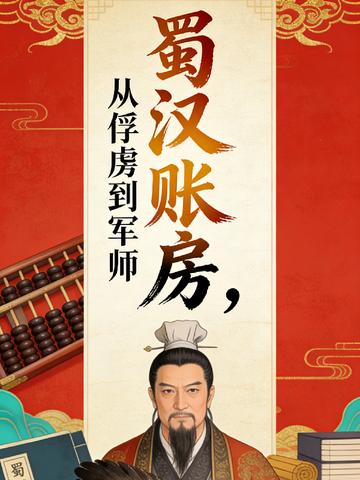
It looks pretty good so far. Everyone is very familiar with the Three Kingdoms, and many stories about traveling through the Three Kingdoms are very obscene. This book is very good to my current reading position. Just like Hong Kong TVB's "Three Kingdoms" film, in the beginning, Zhuge Liang was watched from the perspective of an ordinary person, and gradually began to participate in history. In fact, I even felt that I got involved too quickly. The author is seriously bad at math and does not take the initiative to verify the answer. The data written is very loose. You said that Chen Shou is good at settling accounts. If you have 5,000 people who need food for three months, how can you possibly last for two months if you add 40,000 people? Simple math, it's only enough to feed 45,000 people for ten days. This shows that the author is careless and writes completely casually 🤦🤦🤦🤦🤦🤦🤦
I have read more than 20 chapters. The plot has its ups and downs, and the more I watch it, the more attractive it becomes. The protagonist is slowly growing from the initial captive to Zhuge Liang's student, and his mood is slowly improving.
The writing style is what I felt when I read the new concept composition written by high school students 20 years ago. History is about the time when Meng Huo was captured seven times after crossing the river in white clothes (it cannot make up for the biggest regret of the Shu Han Dynasty. There is a plot and a reversal. It is not passionate and exciting. The dialogue drives the plot.
Although the writing is a bit immature, the ideas and perspective are pretty good. At least in project management, a leader without management grasp cannot promote it, and this is even less visible in other historical white articles. At least some critical paths/risk control/project pivots are sorted out here.
Idealist. Are you afraid? Afraid.
Interesting, good plot design
Well written and worth recalling.