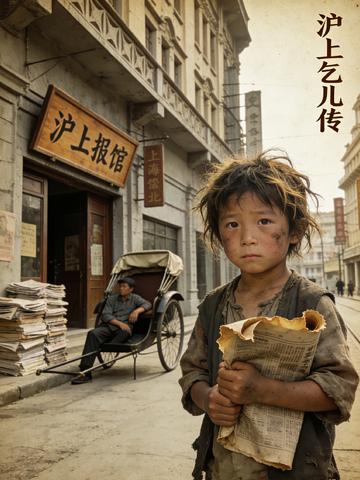
In the 17th year of the Republic of China, in Zhabei, Shanghai, the cold wind blew debris through the dilapidated bridge holes. The little beggar with no father and mother was the most inconspicuous dust in this ten-mile foreign market. He slept in bridge caves and scavenged leftover food. His hands and feet were so cold in the cold winter that they oozed pus. He was squeezed out of protection money by gangsters from the beggar gang. If he didn't pay, he would be severely beaten. He couldn't read a word and had to do his best to survive.
In order to make ends meet, he pretended to be lame and sick, hid copper plates with jingles all over his body, secretly picked up old books to learn how to read, and made countless jokes with his white characters, but he never thought about stealing, kidnapping, and guarding the last bottom line of the low-level people. Once when he was besieged by a gang of beggars on the street, he fought tooth and nail to save the meager wages he earned from selling newspapers. He was unexpectedly saved by an old newspaper editor. From then on, he entered the world of pen and ink. From a small newspaper boy hawking along the street, he became the most diligent handyman in the newspaper office.
Sweeping floors and lighting fires, moving paper and washing ink, he secretly typed and learned typesetting late at night. He was made things difficult for his masters and ostracized by old employees. He had to study hard at the printing press even though he was hungry. He gradually developed from a clumsy apprentice to a typesetter who could do his own job. He helped his neighbors write family letters and read letters for them, using the simplest words.