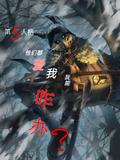
On his fortieth birthday, Chen Mo wakes up on an unfamiliar bridge. His phone contains seven text messages from “himself,” telling him: This is the seventh time you've lived through this day. You failed the first six times. A woman walks toward him from the end of the bridge. She claims to be his wife, and blood runs from a wound on her ankle.
As time passes, Chen Mo gradually discovers the truth: He has seven personalities, and the deepest one emerges every year on his birthday to kill his wife. In the first six times he “woke up,” Chen Mo failed to find and kill the hidden personality, eventually becoming trapped in the bridge's distorted stretch of time as a wandering shadow.
But the truth is far more complicated. The “wife” is actually an illusion he created for himself, a comfort he uses to evade responsibility. The corpses floating in the river beneath the bridge are all people he has killed over the past twenty years. And his supposed “seven personalities” are nothing more than a carefully crafted lie.
In the seventh cycle, Chen Mo finally realizes that there has never been anyone else. There is only himself. He is not the victim, but the murderer.
At the end of the novel, Chen Mo chooses to embrace the “wife,” accepting his guilt and his sins. Time and space collapse, and everything resets. He wakes on another morning with the woman lying beside him. Sunlight streams into the room, and everything seems just as it was.
But on the distant bridge, a shadow stands motionless, staring at him.
Perhaps the cycle never truly ended.