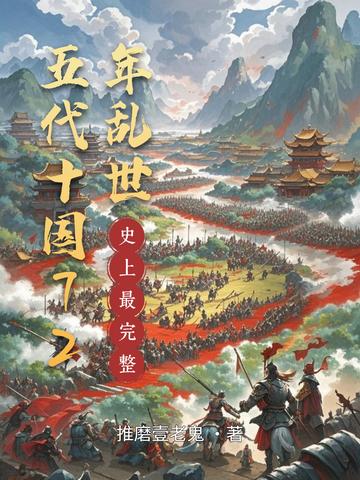
The lights of the Great Tang were going out. Huang Chao's iron cavalry stormed through Chang'an's gates, and from then on there would be no more golden age, only a blood-soaked game of warlords, military commissioners, generals, and rival regimes.
Zhu Wen, a street tough from the countryside of Dangshan, began as a low-ranking soldier in Huang Chao's army. With a blade that killed a military inspector and a letter of defection to prove his loyalty, he climbed from rebel lackey to military governor of Xuanwu, then seized the emperor to command the warlords. He slaughtered the court at Baima Station, killed Emperor Zhaozong and installed Emperor Ai in Fengxiang, before finally accepting the abdication and taking the throne, personally consigning more than two centuries of the Tang dynasty to the grave.
Alongside him strode Li Keyong and his son, leading the Shatuo cavalry; Shi Jingtang, the “son-emperor” of Youzhou and Yan; the short-lived Chai Rong, whose ten-year revival ended with his death; and Zhao Kuangyin, who took the throne in a yellow robe and disarmed his generals over wine. Beyond them were countless nameless people, fleeing the ravages of war, fighting to the death on the frontier, or telling stories in the marketplace.
Grounded in official history and brought to life with unofficial histories and legends, Volume One begins with Huang Chao and tells how Zhu Wen murdered the Tang and founded Liang: winter winds and snow on Bashang, the killing of a general and betrayal of the rebels, the gates of Bianzhou opening and a change of military governor, the disaster at Baima Station and the execution of court officials, the escort of the emperor at Fengxiang, the murder of Emperor Zhaozong and installation of Emperor Ai, and finally the abdication in the fourth year of Tianyou, as Tang fell and Liang rose.
This is not simply a wish-fulfillment tale of political schemes. It is a long attempt to answer a question:
In an age when “everyone only wanted to survive their own short span of life,” how did emperors, warlords, scholars, and common people push a dynasty step by step toward its fall, and how did they then feel their way through the ruins toward the “new order” of the Song dynasty?
Seventy-two years of chaos and dynasties rising and falling in the blink of an eye.
Even after victory and defeat have been decided, someone still writes their names in a book for posterity to judge.
This is the story of the Five Dynasties and Ten Kingdoms.
It is also the story of everyone swept along by their times.