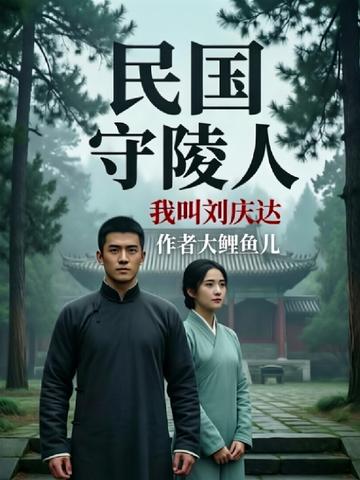
The twenty-third day of the twelfth lunar month, the year Guangxu 34. Little New Year.
Liu Qingda’s father, Old Liu Suan, picked up a few old newspapers at the market to use as wall covering. That very night, Qing soldiers dragged him away. Three days later, he was beheaded in public.
Liu Qingda stormed into the county office to demand an explanation, but they took him for an accomplice and threw him into the death row cells.
There was an old Daoist who had pretended to be insane for sixty years, a wronged woman who had died and become a ghost, and a revolutionary who faced death without flinching. Before the Daoist died, he pressed a piece of bronze into Liu Qingda’s hand. It was the key left behind by the Yongli Emperor three hundred years earlier. The instructions consisted of only sixteen characters: “At the bottom of the Yellow River, atop Mount Tai, in the heart of Miao territory, on the Yunnan-Burma border.”
The ghost grabbed his wrist and said, “Help me find my son, and I’ll make sure you get out alive.”
As the revolutionary drew his last breath, he fixed his eyes on Liu Qingda. “Stay alive. Go find them.”
He crawled out of a pile of corpses carrying three lives on his conscience, a piece of bronze, and the task of finding a missing son. From the prison in Yanzhou to the Shanghai Bund, from the mountains of western Hunan to the jungles on the Yunnan-Burma border, twenty years in the jianghu led him to a three-hundred-year-old treasure mystery.
Someone asked him if it was worth it.
He said, “Some things matter more than life.”
My name is Liu Qingda. I am a tomb guardian.