This work is based on "The Peony Pavilion" written by Tang Xianzu of the Ming Dynasty, and is translated into modern vernacular and adapted in the form of storytelling. In addition, modern storybook editions of the remaining three works in Tang Xianzu's "Four Dreams of Linchuan" - "The Peony Pavilion", "Nanke Ji" and "Handan Ji" have also been launched respectively.
Plot summary
The story is set in Nan'an, Southern Song Dynasty. Du Liniang, the daughter of the prefect Du Bao, was disciplined by etiquette since childhood. While visiting the garden in the spring, I fell into a sleepy sleep and had a tryst with Liu Mengmei, a scholar from Lingnan, by the Peony Pavilion. I woke up from the dream and became lovesick, and died of depression after painting my spring face. She was buried under the plum tree in the back garden. She asked her maid Chunxiang to ask Taoist Sister Shi to guard her. Three years later, Liu Mengmei went to Lin'an to take an exam and stayed at the Plum Blossom Temple, where she found her beautiful face and longed for her day and night. Liniang's soul was found, humans and ghosts fell in love, Liu Sheng opened the coffin, and Liniang came back to life. The two went to Yangzhou to look for Du Bao, but Du Bao recognized Liu Sheng as a grave robber and sent him to Lin'an; Liu Mengmei had already won the first prize. In the end, in the Jinluan Palace, Liniang and her mother, Zhen, faced off in court, and the emperor broke up the relationship. Du Bao was forced to recognize his daughter and son-in-law, and the marriage was completed.
Reader comments
This "Peony Pavilion Modern Storytelling Edition" reconstructs the classics with popular pen and ink, transforming Tang Xianzu's life-and-death love story into a vivid narrative. The adapter retained the core plot and used a storyteller's tone to tell the story of Du Liniang's dream in the garden and her resurrection from the dead. This not only restored the core of "love does not know where it started, it goes deeper", but also used modern vernacular to eliminate the ancient threshold. The characters are vividly depicted and the plot is relaxed and relaxed, which not only shows the conflict between the constraints of ethics and the pursuit of true love, but also highlights the ideological tension of the work across time and space. The popular adaptation has not lost its elegance, allowing the charm of classical opera to continue in the contemporary era. It is a successful attempt to popularize classics.
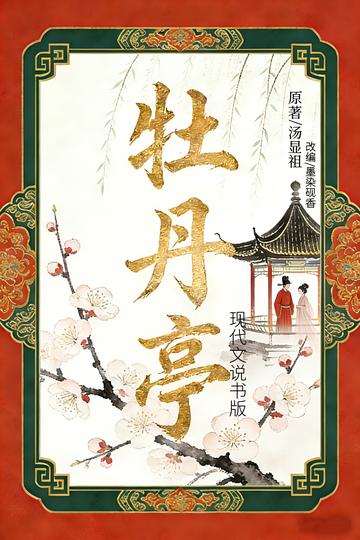
This "Peony Pavilion Modern Storytelling Edition" reconstructs the classics with popular pen and ink, transforming Tang Xianzu's life-and-death love story into a vivid narrative. The adapter retained the core plot and used a storyteller's tone to tell the story of Du Liniang's dream in the garden and her resurrection from the dead. This not only restored the core of "love does not know where it started, it goes deeper", but also used modern vernacular to eliminate the ancient threshold. The characters are vividly depicted and the plot is relaxed and relaxed, which not only shows the conflict between the constraints of ethics and the pursuit of true love, but also highlights the ideological tension of the work across time and space. The popular adaptation has not lost its elegance, allowing the charm of classical opera to continue in the contemporary era. It is a successful attempt to popularize classics.