His name was Shen Wang. In games, his win rate was 31 percent, he’d been captured 17 times, and his entire army had been wiped out 23 times. He was an ordinary player.
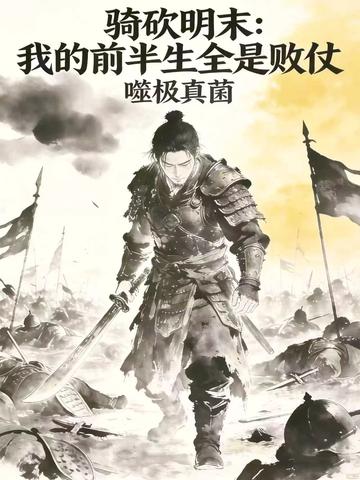
When he opened his eyes, he had become a defeated soldier in a border fort at the end of the Ming dynasty, on the verge of starving to death.
[The Chart of Mountains, Rivers, and Society has been bound. Checking Host’s historical record...]
He had no divine weapons and no provisions, only a mind full of knowledge from a more advanced era and a bone-chilling reality: this was a hell where people ate one another and parents exchanged children for food.
He’d fought the most humiliating battles and eaten the most inedible “wheat gruel.” An old soldier beside him shoved a notched blade into his hands and grinned. “You coward, run! I’ve fought for thirty years and lost for twenty-nine. One more loss won’t make a difference!”
From that day on, Shen Wang carried the blade and began his career of “losing battles” at the end of the Ming dynasty.
He lost cities, brothers, and everything he held dear.
But he always managed to claw his way out of the heaps of corpses, lead the survivors onward, and keep heading east.
People said he fought on despite repeated defeats, like some unkillable joke.
Only he knew he wasn’t trying to win for himself.
With one defeat after another, he was fulfilling a promise:
that those who hadn’t survived would one day see cooking smoke rise over this land again.
This is the story of a man who lost all his life, yet ultimately won peace for eight thousand people.
In the first half of my life, I only wanted to survive.
In the second half, I looked on behalf of everyone who didn’t make it.





In the late Ming Dynasty, he led the team to carry out famine-style development.