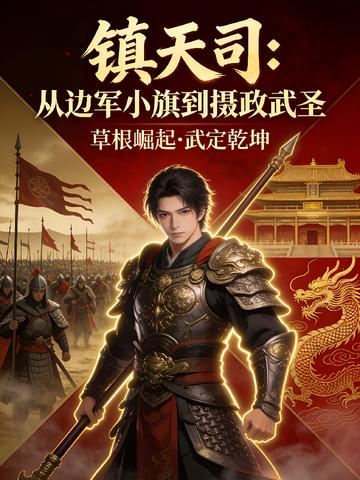
During the Chinese New Year weekend, the snow at the border was as heavy as a mat.
Military pay was cut off, food routes were cut off, and barbarians were encamping for thirty miles outside the city, but there were people inside the city busy "keeping accounts."
Xie Zheng was just a small flagman in the frontier army. He came from a military family and his life was as thin as paper - if he said "climb first", he would have to go to the top of the city to serve as an arrow target; for a piece of military merit, even touching it would be regarded as overstepping. But in a military supply account, he saw a name that shouldn't have appeared: his father.
That was not an old case, someone had written his father's life into today's black account.
In order to survive and to reverse the case, Xie Zheng went out of the city on a snowy night and captured the flag; he fought bloody battles at the top of the city and used a group of skirmishers to forcibly twist them into a military formation; he nailed the damned person to the flagpole and held the evidence he needed in the palm of his hand - but if the battle was won, the credit would be taken away; if the city was defended, the crime would fall on him.
Three days later, he went to Beijing for trial.
There is a sword in the capital called "Zhentiansi".
It kills people for the imperial power and decides the case for the world.
What's even more terrible is that the unjust case that Xie Zheng wants to overturn is actually entangled with an old case of the Zhentian Division - affecting powerful officials, feudal lords, clans, and even the "national destiny".
From the small flag of the border army to the sword of Tianshou, from guarding a city to guarding a country.
He has seen the mountains of corpses at the border and the smiling faces of the court; he has fought against Hu Qi and fought against the Prime Minister's house.
The most ruthless thing in this world is never the sharpness of the sword.
Instead, some people use "rules" as a knife to chop up living people.
Xie Zheng doesn't believe in fate, nor does he believe in anyone who is born noble.
He only believes in one thing:
Debts must be settled; blood must be paid back.
When the vassal town raises troops and national divisions