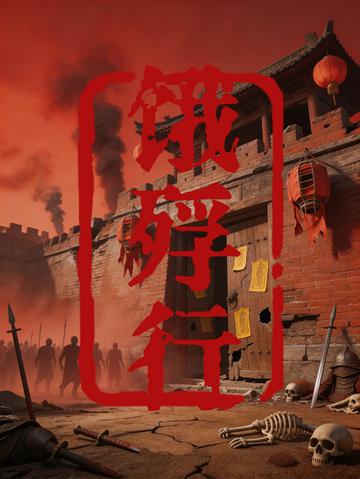
The four volumes of "Hungry Death" span 118 years from the 12th year of Chongzhen to the 30th year of Qianlong. It describes how an ordinary person and a group of ordinary people kept the faintest light in the darkest era. In terms of historical details, I tried my best to restore the social changes in the late Ming and early Qing dynasties: the drought of the Little Ice Age, the Chongzhen epidemic, Li Zicheng's uprising, the Qing army's entry into the customs, the hair-cutting order, the reconstruction during the Kangxi period, and the prosperity of the Qianlong period. But the core is not history, but people. How can ordinary people like Sanjin, who have no name, no power, and no resources, use the wisdom of "Yuan" to live their lives and let others live. What is "source"? It is not a mysterious power, but a certain method that has been summarized, passed down, and implemented to make people live. Finding water, identifying herbs, delivering babies, rescuing people, telling stories, planting apricot flowers, all of these are sources, the ability to make flowers bloom, and the will to live. In the end, Sanjin did not become a hero or a saint. He died, like everyone else, but he lived in the source, in all the people who inherited him, and in all the people who made the flowers bloom. This is homecoming, not geographical, but of life, and eternal. Thanks for reading.