"Red Soil Sinking Bell"
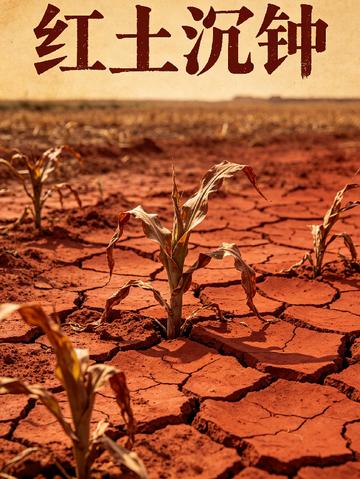
In the literary landscape of contemporary China, documentary writing has always been a double-edged sword. It not only splits the folds of reality and exposes the games, sinkings and awakenings hidden behind the scenes, but also maintains the bottom line of literature and uses the subtleties of human nature and the texture of the times to weave a network that allows readers to empathize. The special feature of "The Bell on Red Soil" is that it is neither a curiosity-seeking exhibition about the collapse of power nor a conceptual preaching of the anti-corruption storm. Instead, it uses the "disease" and "healing" of a piece of red soil as a specimen to cut a cross-section of the political ecology of China's counties, and also to reveal the greed and remorse deep in human nature.
When I first read this manuscript, I was first attracted by its "true title" narrative - not the condescending "other" observation, but the blood marks carved on the paper by Jiang Jingshan (and the countless "Jiang Jingshan" behind him) who spent half his life sinking and the second half of his life atonement. This kind of "self-dissection" documentary shows the flesh and blood the most. Jiang Jingshan's life trajectory is a typical example of a "red clay official": from "respecting heaven and earth" as a boy in Rongxi, to "understanding the rules" as he advanced in officialdom, to "forgetting his original intention" at the peak of power, and finally to "thunder-like reporting" and "repentance for the rest of his life" after falling into jail. Every step we take steps on the drumbeat of the times and the trap of human nature.
What is particularly rare is that the author (or "recorder of history") did not stop at the surface of the "anti-corruption story". It goes deep into the fabric of Zhangxi Mansion (this pseudonymous red land): How can the set of "official rules" that have been in operation for many years be alienated?
Reader comments
The author's writing style is exquisite, and he writes about the dilemma and persistence of young people at the grassroots level in a real and touching way, with strong empathy.
The words are restrained and powerful, expressing the unspeakable feelings of many people and making people think deeply.
The author's writing style is exquisite, and he writes about the dilemma and persistence of young people at the grassroots level in a real and touching way, with strong empathy. The words are restrained and powerful, expressing the unspeakable feelings of many people and making people think deeply.