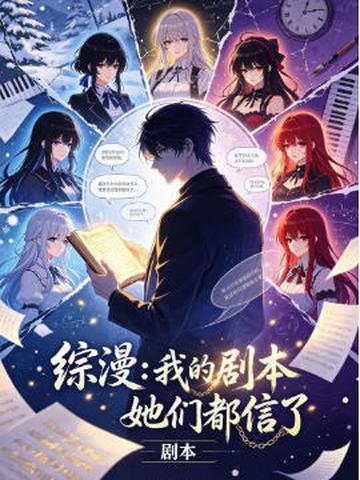
Su Yue is bound to the "narrator script" system and must speak designated lines to designated people every day. The first sentence was said to Touma Kazusa: "Snow can cover up lies, but the piano can't lie." Touma turned around suddenly - this sentence just revealed the secret she had hidden for two years.
From then on, he became the most mysterious Riddler in the school. Every line he spoke hit the opponent's wound accurately, and everyone thought he knew everything. Only he knows it - he is just a puppet reciting words.
Until Kuang San appeared. She asked him to find someone named Saye. The lines in the system began to match what Shahe said during her lifetime. Kuang San stared at him, the pointers in his pupils stopped: "Why is there her voice in your system?"
The truth emerged from AST's top-secret files - the Dream Weaver Project, Experimental Subject B-12. This world that is a fusion of comics and comics was not something he traveled through time, but was written by himself. The snowy night of Touma, the red thread of Yukina, the cage of Kasumigaoka, the wounds of Origami, and the yarn that Kurumi can never catch up with - all are his pen.
And forgetting has already begun. Kasumigaoka printed "Dedicated to Su Yue" on the title page but could not remember who he was. Haruki nodded politely to him in the corridor, like a stranger. Yukino's Excel became garbled line by line.
Only Dongma was still playing the piano. But she no longer played any of the old tunes he had named.
"The wounds you wrote about are the wounds you inflicted on me. These are my own."
Su Yue clutched the cracked pocket watch and finally asked that sentence - you asked me to write about everyone's pain, and then asked me to stand here and watch them suffer one by one. Why me.
Reader comments
My understanding of Touma Kazusa is based on my feelings: Because of Touma Yaoko's desire for control, excessive protection, and the expectations imposed on her, her life was forcibly arranged, ignoring Touma's feelings and choices, and never giving positive feedback. "These are what you should do." Treat Touma Kazusa as her own accessory, an extension of her own halo. This is also the root of Touma's inferiority, lack of love, and lack of self-identity. Dongma's stress response to Dongma Yaozi's control is that he hates being paid attention to, being evaluated, being heard, or seeing himself playing the piano. The essence is a set of defense mechanisms built out of the fear of being defined and seen by others about his inner fragility. The appearance of Chunxi and her "kindness" to Dongma without asking for anything in return made Dongma think that Chunxi could accept her and identify with herself. However, the nature of any altruism is actually for self-satisfaction. Chunxi's essence is the need to "be needed". He is playing the role of a conscientious and good man, who will be very tired because he needs to pay, but if he doesn't play the role, he is afraid that he will not be "needed". Therefore, what Chunxi actually likes is Dongma who lacks self-identity and love. Dependent on him but at the same time afraid to ask for it because of low self-esteem. Haruki actually likes herself for self-satisfaction. Touma also likes herself. She needs Haruki to give her value and Chunxi's kindness to her to prove that she is worthy of love. She leaves the choice to determine the value of her own existence to others. Even in the ending of White Album 2, even if Touma and Haruki are together, they are just dependent and fail to achieve true transcendence.
In essence, many of the so-called redemptions in today's love-themed novels or animations are pseudo-redemptions. It's just that the two parties are dependent on each other and leave the choice of determining self-worth to the other party, instead of me having value myself and deciding my own value. Neither of them is a truly spiritually independent person.
Not bad, just stomachache
The plot is fascinating and progressive, the emotions between the characters are full of complexity, and the tacit understanding between the protagonist and the heroine is very good.
Interactions between characters are lively and interesting
My understanding of Touma Kazusa is based on my feelings: Because of Touma Yaoko's desire for control, excessive protection, and the expectations imposed on her, her life was forcibly arranged, ignoring Touma's feelings and choices, and never giving positive feedback. "These are what you should do." Treat Touma Kazusa as her own accessory, an extension of her own halo. This is also the root of Touma's inferiority, lack of love, and lack of self-identity. Dongma's stress response to Dongma Yaozi's control is that he hates being paid attention to, being evaluated, being heard, or seeing himself playing the piano. The essence is a set of defense mechanisms built out of the fear of being defined and seen by others about his inner fragility. The appearance of Chunxi and her "kindness" to Dongma without asking for anything in return made Dongma think that Chunxi could accept her and identify with herself. However, the nature of any altruism is actually for self-satisfaction. Chunxi's essence is the need to "be needed". He is playing the role of a conscientious and good man, who will be very tired because he needs to pay, but if he doesn't play the role, he is afraid that he will not be "needed". Therefore, what Chunxi actually likes is Dongma who lacks self-identity and love. Dependent on him but at the same time afraid to ask for it because of low self-esteem. Haruki actually likes herself for self-satisfaction. Touma also likes herself. She needs Haruki to give her value and Chunxi's kindness to her to prove that she is worthy of love. She leaves the choice to determine the value of her own existence to others. Even in the ending of White Album 2, even if Touma and Haruki are together, they are just dependent and fail to achieve true transcendence. In essence, many of the so-called redemptions in today's love-themed novels or animations are pseudo-redemptions. It's just that the two parties are dependent on each other and leave the choice of determining self-worth to the other party, instead of me having value myself and deciding my own value. Neither of them is a truly spiritually independent person.
Not bad, just stomachache
The plot is fascinating and progressive, the emotions between the characters are full of complexity, and the tacit understanding between the protagonist and the heroine is very good. Interactions between characters are lively and interesting