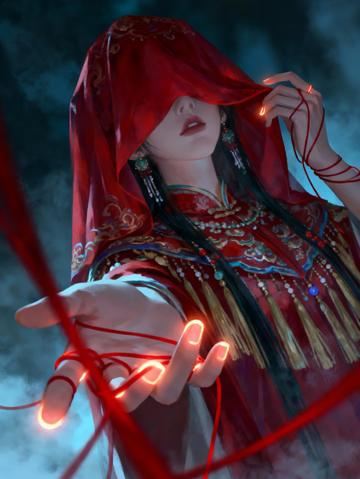
On a yin year with a yin month and a yin day, nails are put into the coffin alive, which is called "adding happiness".
The custom of "living burial" in the Zhou Dynasty was to use women's resentment to suppress the ghost house and promote descendants. The wedding coffin is painted with a picture of a hundred children on the outside, a soul-soothing charm is engraved on the inside, and an air hole is left on the bottom of the coffin - it can last for three to seven days. During this period, the bride is awake, carving the coffin wall with her fingernails, and counting the hours with her blood.
Shen Zhaoshuang's ancestor opened a coffin specifically for ghost marriages, and because he offended the powerful, he destroyed his family. She survived and made a living by breaking off engagements for others. She was cursed: every time she opened a coffin, she lost a feeling.
She couldn't smell the fragrance of corpse wax oozing out of Huai'an Village, couldn't taste the combined wine offered by the shipwreck girl, couldn't hear the quarrel between the two souls in Xiulou, and couldn't touch the hands offered by the Yizhuang brothers. When the last feeling was peeled away, she finally "saw" the truth——
All wedding coffins are the same coffin, all brides are the same bride, and all curses are the same sentence: They are waiting for you to come in.
Ancient proverbs of horror × female supernatural beings use the five senses to describe the screams and silence in the coffin of etiquette.