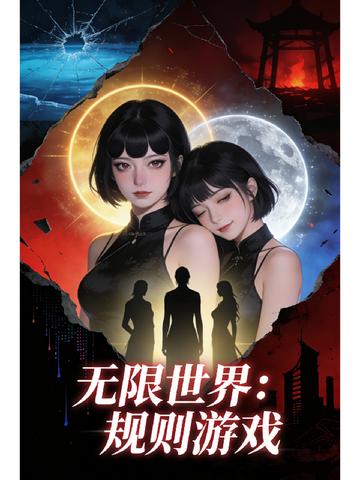
Chen Fengqi opened his eyes and found himself lying in a dilapidated ancient village. My younger sister, Chen Yekong, was standing next to me, complaining in her usual lazy tone: "Does this opening look like that cheesy unlimited streaming web drama you had to watch last week?"
They were involved in an incomprehensible advanced civilization experiment - ten novice villages, each with one hundred players, randomly entering three areas through the gate outside the village: Eastern ancient times, Western medieval times, and four-gender modern times. The rules of each area are amplified to extremes: filial piety makes you willing to lie under the ice, divine power makes you personally identify the "witch" and die, and capital makes you never stop.
They met the calm Mu Ling, the silent Wu Qi, and the mysterious Mo Li. The abilities of the five people - devouring, creating, mind control, weapon mastery, and telepathic resonance - are gradually awakened in ten copies. But the real horror is never the monsters, but the rules that are packaged as "naturally justified": the twenty-four filial piety is true, the witch trials are true, and the solidification of classes is true.
When they cleared all the dungeons and returned to the original novice village, the AI previewing the world announced: The experiment was over and the world was about to be destroyed.
Chen Fengqi looked at the ice lakes, churches, and office buildings along the way, and at the players who struggled, laughed, and died, and asked his sister softly: "Can you prevent it from disappearing?"
Chen Yekong sighed: "I knew you were going to say this."
On that day, the sun god and the moon god were born.
Reader comments
The description is detailed, the structure is clear, and the sense of substitution is strong
The description is detailed, the structure is clear, and the sense of substitution is strong