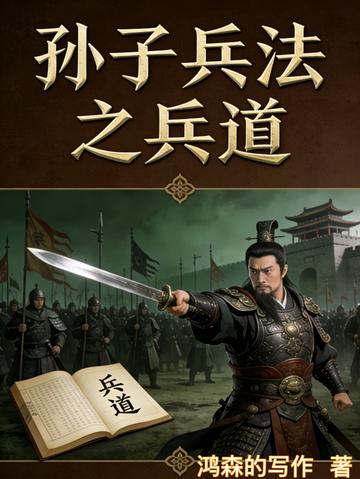
In the sixth century B. C., At the end of the Spring and Autumn Period, the princes conquered the country and destroyed rituals and music. Tian Shu, the concubine of the Tian family in the state of Qi, joined the army as a young man. After nearly being defeated, fleeing, changing his name, and writing books, he finally became Sun Wu, a military sage. He created the King of Wu's hegemony with thirteen articles on the Art of War, but in a war that could destroy humanity, he saw clearly the ultimate secret of the Art of War - killing people is to keep people alive.
Sixty years later, the Warring States Period started again. Sun Bin, the grandson of Sun Wu, came down the mountain with his ancestral military skills. However, he was framed by his fellow disciple Pang Juan, and Bin got a tattoo. In the darkest moment of his life, he realized from his grandfather's manuscript that there is a higher morality than victory or defeat. When the fire on Maling Road lit up the night sky, and when thousands of crossbows were fired at his former senior brother, he finally understood: the real art of war is not to kill the enemy, but to stop the tears of everyone in the world.
Another hundred years later, Shang Yang carried out his reforms, and Ying Si, the prince of the Qin Dynasty, accidentally obtained a fragmented "The Art of War" by Sun Tzu, while facing Shang Jun's cruel laws, the counterattack of the old family, and the swords and swords of other countries. He tried to use the art of war to resolve the coldness of Legalism, but in the gap between power and humanity, he faced a more dangerous choice than the battlefield.
Three generations of military strategists and a hundred years of vicissitudes. The art of war can capture cities and territories, but can it protect people's hearts? Killing can bring order to the world, but can it bring about a meal for the common people?