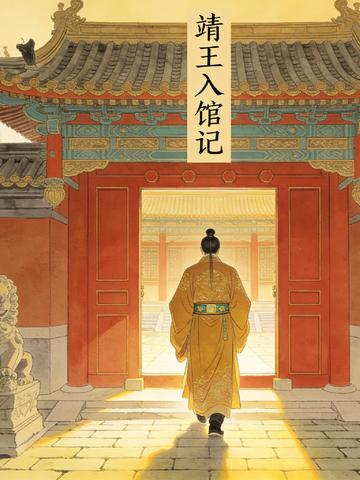
Xiao Heng, Prince Jing of the Dajing Dynasty, who had great military exploits, was swept into another world by a strange white light when suspicion of imperial power and palace changes arose. When he opened his eyes, he fell into the history museum a thousand years later.
The prince who used to be in charge of military power and commanded all directions was suddenly faced with glass display cabinets, luminous utensils, strangely dressed people, and the cruel truth that "Dajing has been destroyed for thousands of years." He went from shock, grief to bewilderment. He regarded bronze cultural relics as important artifacts of the ancestral temple, regarded the commentators as officials, and regarded ordinary things such as mobile phones, electric lights, and cars as "wonderful tricks", causing a series of ridiculous misunderstandings in modern society.
With the help of museum staff, this ancient prince was forced to take off his python robe and put on modern clothes. He learned to read, use a mobile phone, cross the street, and adapt to urban life. In the collision between majesty and clumsiness, ancient style and modernity, he struggled to integrate into the modern world while looking back on the rise and fall of his motherland. The dynasty he once guarded now has only cold cultural relics left; the emperor he swore allegiance to has long been recorded in history; and he himself has become the only "living fossil" in history.
The full text is centered on time travel + museum + modern survival of an ancient prince. The plot is light and interesting, with strong contrasts. It contains both the laughter of cultural collision and the confusion of things and people. It vividly depicts the survival, growth and self-reconciliation of an ancient prince in a strange era.