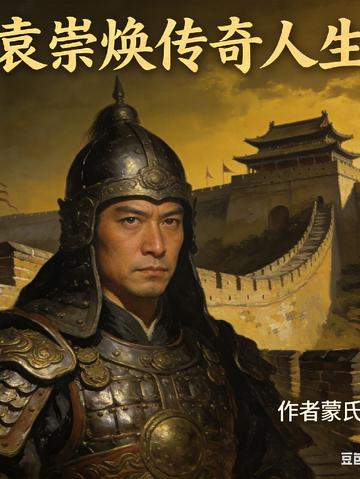
Introduction to the novel "The Legendary Life of Yuan Chonghuan":
He was born in the water town of Lingnan. He was originally a scholar, but he had a heart for the frontier thousands of miles away. He started from a young age, relied on his lonesome courage to support the crisis in the late Ming Dynasty, and eventually became a pillar of the border border. However, he ended up dying for his country late and suffered injustice for hundreds of years. The full-length historical novel "The Legendary Life of Yuan Chonghuan" is based on real historical materials and literary strokes as the soul. It panoramically reproduces Yuan Chonghuan's ups and downs from a young hero to the governor of Liaodong, and reveals the game of loyalty and traitor, the blood and tears of the family and the country under the setting sun of the Ming Dynasty, and the historical destiny.
Yuan Chonghuan was awarded the title of Jinshi at the age of thirty-five. When he was appointed as a local official, he was honest and caring for the people. After riding alone through the fortress, he resolutely asked for a tassel to guard the border. When the Liaodong defense line collapsed, he defended Ningyuan Gucheng alone, defeated the Houjin Iron Cavalry with red cannons, severely damaged Nurhaci, created war miracles such as Ningyuan Victory and Ningjin Victory, and became the most dazzling general in the late Ming Dynasty. When he was in danger, he summoned his opponents, promised to restore the Liao Dynasty in five years, and guarded the border with Shangfang's sword in his hand. However, he angered the eunuchs because of his uprightness, and he also planted the seeds of disaster for killing Mao Wenlong and secretly discussing peace.
Huang Taiji resorted to counter-intentional tactics, and the traitors in the court took turns to frame him. Emperor Chongzhen was stubborn and suspicious, and sent this hero who worked hard for thousands of miles and protected the country with blood into the imperial edict. In the end, Yuan Chonghuan was unjustly sentenced to Lingchi. The people misunderstood and scorned him, and his subordinates risked their lives to steal his head and bury him secretly. A generation of loyal generals died with hatred. It was not until a hundred years later that the injustice was redressed and loyalty was finally remembered.
The novel uses a grand narrative to restore the situation in Liaodong in the late Ming Dynasty, and depicts the hero's iron-bloodedness and tenderness, persistence and helplessness with delicate brushstrokes. It not only describes the thrilling battles on the battlefield, but also describes the turbulent intrigues of the court.