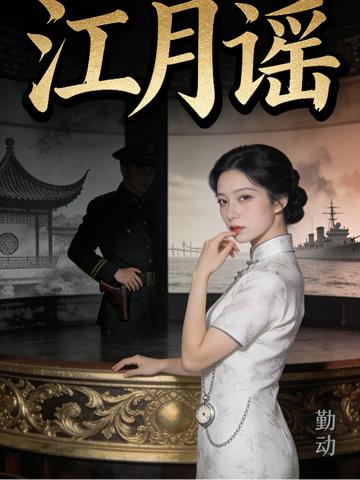
In the spring of 1937, Su Nianya, the daughter of a wealthy Suzhou shipping businessman, suffered a tragic death on the night of her eighteenth birthday party. She fled to Shanghai and became a singer. She carried a pocket watch left by her father - engraved with a set of mysterious coordinates related to a hydrological shoal map that could change the situation of the Yangtze River.
Kuomintang intelligence officer Shen Moxuan was ordered to trace the drawings, but under the dim lights of the singing hall, he saw in the eyes of the woman singing French chanson, a sobriety and determination that was completely different from ordinary singers. He was supposed to seize the blueprints and eliminate hidden dangers, but he blocked hidden attacks for her time and time again.
When the Japanese spy leader "Shadow" aimed his gun at Su Nianya, and when the Yangtze River defense line was in danger, she stroked the pocket watch under her cheongsam and smiled at Shen Moxuan: "Tell me, should they get the map first, or should I let the whole river remember my song first?"
This is a secret war using memory as a weapon and singing as a password. Under the identities of the singer of Qinhuai River, the pillar of Paramount, and the teacher of Chongqing air-raid shelter, she was always the Su Nianya who swore at her father's desk that "pictures can be destroyed, but people cannot be destroyed." In the war of troubled times, the most dangerous thing is never the guns, but when you give your heart to another person completely, along with the weight of your family and country.
Reader comments
It's quite good, a novel about the Republic of China [laughing]
It's quite good, a novel about the Republic of China [laughing]