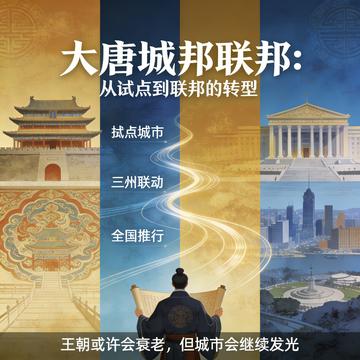
He once built a metropolis of millions in Cities: Skylines, but after an accident, he wakes in a desolate border city in the Tang Dynasty.
The walls are crumbling, the granaries are empty, the military farms are in disarray, and the people are starving and freezing.
He gets no golden finger to provide him with technology and no System that can create things out of thin air. All he has is the ability to model the development of civilization.
He uses the city as a game board:
He zones districts, restructures taxes, unifies the granaries, and creates a model for military supplies.
He uses institutions as weapons:
He brings transparency to public finances, introduces performance reviews and data-driven governance, and weakens the aristocratic clans' monopoly.
He uses trade routes as lifeblood:
He connects prefectures and commanderies, builds alliances, and creates an independent fiscal network.
As the border city prospers, the garrison stabilizes, and trade flourishes, reports reach Chang'an.
The emperor summons him.
The aristocratic clans are shaken.
From a pilot program in one city, to coordination across three prefectures, and then nationwide implementation.
In the end, the Tang is no longer an empire ruled solely by imperial authority, but a federation of city-states led by urban councils.
The emperor remains, but as a figurehead.
He rejects power and position, leaving behind only the institutions.
A dynasty may grow old, but cities will keep shining.