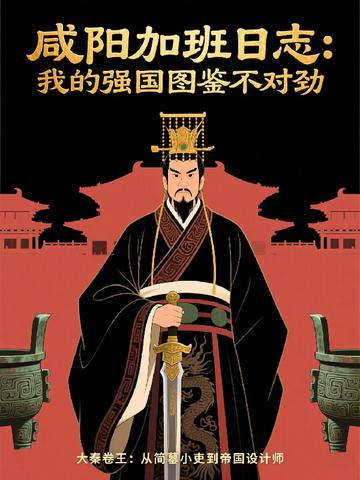
Archivist Jiang Shubai suddenly died in an ancient books digitization project, and when he opened his eyes again, he turned out to be Lu Qi, the son of a bamboo slip craftsman in Xianyang City in the Qin Dynasty. Bind the [Powerful Illustrated System], but find that the golden finger is limited - history can only be promoted through "enlightenment", and direct spoilers will be punished by blurred memory.
Starting from a piece of "deed triple sheet" in Nanshi, he improved the documents and unified measurement. He was favored by Nei Shiteng and stepped into the logistics center of the extermination of Han and Zhao. The system tasks are pressing step by step: lay a unified foundation within five years and unlock the four-dimensional illustration of agriculture, armaments, government, and people's trust.
He made standards for crossbows, designed the structure of counties and counties, and promoted code improvements. However, he was repeatedly warned at historical points: to save Qin Shihuang, he accelerated the burning of books, and improved ordnance promoted conquests. System rewards and moral costs are repeatedly at odds, and modern thinking collides violently with the iron laws of the Qin Dynasty.
When Qin Shihuang made his fifth eastward tour, the system displayed the final decision: [30 days countdown to the Dune Change, do you want to intervene? Jiang Shubai hid the "Governing the Qin Policy" that he had compiled throughout his life in the basement of the Academy, choosing to let history proceed on track.
After the fall of Qin and the rise of Han, an archaeological team opened the bronze box two thousand years later. The neat small seal inside said "Data governs affairs, standards benefit the people" - the archivist who died working overtime at night, in the most Qin Dynasty way, planted a fire that transcended the times.