Lin Sheng's adoptive mother chose her name. Sheng was an ancient musical instrument with a lonely sound. Her life seemed to bear out the name: adopted, controlled, and married at eighteen to a man who was meek and submissive outside the home, but violent and volatile within it.
Over seven years of marriage, she learned to use foundation to cover bruises and curl up when the blows came. The one thing she could never learn was how to fight back. Until one night, her four-year-old daughter, Xiao Tang, rushed over to shield her, fear filling her eyes just as it filled her mother's.
At that moment, Lin Sheng saw herself in her child's eyes: a shadow so lowly it seemed buried in the dirt.
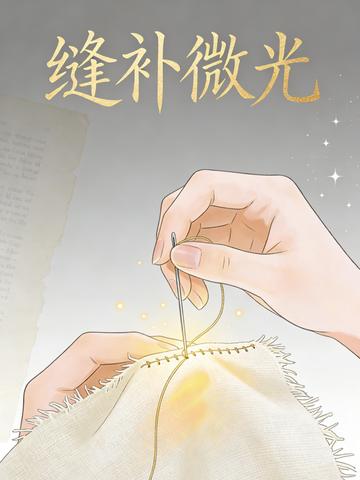
Divorce was the bravest decision she ever made. She left with nothing but her child and rented a damp partitioned room. Working night shifts at a supermarket, she was so exhausted she could fall asleep standing up. Her ex-husband harassed her, and her adoptive parents scolded her for being unreasonable. Life was like an old garment full of holes: no matter how she tugged at it, it tore somewhere else.
But she insisted on mending it.
The day she picked up a paintbrush, she had no idea what it might change. She only wanted to paint her daughter sleeping, to capture the outlines of two people huddled together in the dark. The paintings had no technique, only heartbeats. They began in a community art class and made their way onto the internet, into galleries, and into a world she had never dared imagine.
This is not a story about a triumphant comeback. It's the story of a woman rebuilding a home for herself and her child, brick by brick, amid the ruins.
Her name was originally Lin Sheng. Later, someone asked her, “Does anyone listen to your sheng now?”
She smiled and looked at the little girl holding her hand.
“Yes. That listener has always been here.”