Stats
Synopsis
No synopsis yet.
We haven’t got an English blurb for this one. It appears once the source description has been translated.
Reader comments
In booklists 4





Recommend Some Fascinating Ancient Novels About Miracle Doctors That You Have Read in Recent Years.
I personally like to read ancient novels, time travel, rebirth, imaginary, history, solving crimes, etc. In recent years, there have been a lot of ancient novels, but not many of them are of good quality. You have all read those ancient novels that are of high quality and very attractive. Let's share them together.
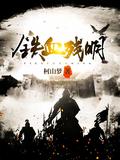
Are There Any Novels from the Late Ming Dynasty That Are Comparable to Ke Shanmeng's "The Iron-Blooded Remnant"?
Don't use system literature, let alone travel through time without thinking and make guns and cannons. Anyway, it's just two words, real! ! ! Start from scratch, step by step, it doesn't have to be the end of the Ming Dynasty, it's just troubled times anyway
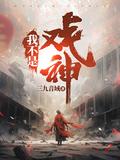

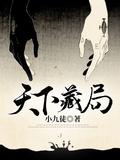

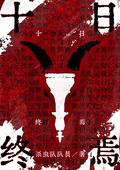
A Novel with a High Score of 9.9
I want to read a book like "I Learned to Kill Gods in a Mental Hospital". Are there any books with high scores of 9.9? Don't hide it secretly. There are no books left to read.





There Is a Shortage of Books, Please Recommend, Please Don't Take Any Space! No Space Required! No Space
Please ask for books of all types, just don't take any space, don't take any space, don't take any space! ! ! It's best not to use cheat system! ! ! Also, be more rigorous in your writing, don't write an ancient text with a bunch of modern items, etc.! ! ! Asking for articles
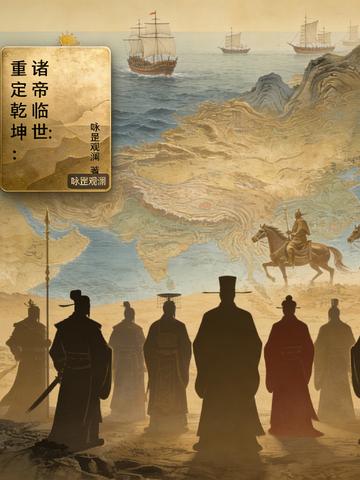
It is objective and not exaggerated, the names of people are consistent with history, and the names of places are consistent with geography! The most outstanding core feature of "The Arrival of Emperors: Redefining the World" is its top-notch realism skills, which are factual and well-founded throughout the book. The characterization, historical logic, geographical pattern, extraterritorial games, and border expansion sequence in the book all follow the laws of real history and geography. The plot does not rely on mindless tricks or simple artillery fire to advance, but deeply integrates multiple clues of military conquest, secret warfare of spies, public opinion attacks, cultural infiltration, and instigation of rebellion. It pays equal attention to civil and military affairs and has solid power strategies. It completely throws off the suspended feeling of most fictional historical Internet articles. The author breaks out of the single-output writing mode and starts a unique reader-created interactive design starting from Chapter 550. After years of campaigning, he has developed a large overseas territory. New Guinea, Kalimantan, Luzon Islands, Japan, Korea and many other jurisdictions need to be divided into states and counties, and new place names need to be drafted. The author has opened a collection of state names to all readers, and the brilliant names will be written directly into the main text settings. In addition, readers will also be consulted on the core plot direction. For example, the subsequent governance plan for the two eastern territories of Japan and Korea will be directly included in the territory after the First World War, a long-term siege and gradual assimilation, or the strategy of division and control will be adopted. All are open for readers to communicate and discuss, allowing readers to personally participate in the grand story of China's domination of the world, with a unique sense of substitution and participation. In addition to interactive design, the creation of historical characters in the book is rigorous and restrained, and the core characteristics and life background of historical characters are never arbitrarily tampered with. Take Zhu Wan, the admiral of the forbidden sea patrol and anti-smuggling fleet, for example. According to the official history, he was ordered to crack down on maritime smuggling and acted impartially. However, because he harmed the interests of coastal dignitaries and maritime business groups, he was accused by many parties and eventually died unjustly. This book retains Zhu Wan's upright and honest heart, and cleverly optimizes this tragic past: Zhu Wan was arranged to fake his own death, so that the smuggling forces would lower their guard and expand wantonly. After the complete chain of interest collusion and secret strongholds of the other party were exposed, they would reappear and eliminate the entire maritime smuggling network in one fell swoop. This not only fits the character's original acting style, but also makes up for the regrets left by history. The character's image is three-dimensional and logically coherent. After the character creation, the war description in the whole book can be called hard-core textual research and realism that is rare in similar works. Whether it is a large-scale naval battle in the ocean or an offensive and defensive battle on land, the author has read through a large amount of historical materials from the Age of Discovery. The ship shape, maritime battle formations, artillery combat procedures, and land battle formations are all based on evidence, eliminating outrageous settings that are fabricated out of thin air. The details of the disposal of remains after the war can better reflect the realism skills: at the end of each battle, the number of casualties on both sides will be accurately counted, and our fallen soldiers will be centralized and properly buried; the enemy's remains will not be abandoned in the wilderness or thrown into the sea. Plague could easily break out if tens of thousands of corpses were piled in the open air, and the water would be polluted if thrown into the sea. The book adopts processing methods that are in line with ancient epidemic prevention logic. Enemy corpses are stacked in a centralized manner and burned with sulfur to disinfect them. The ashes are transported to the top of the mountain and mixed with lime and buried deep underground to avoid the hidden danger of groundwater pollution. Various details are consistent with realistic common sense and are full of realism. Under the war system, the people's livelihood economic sector has also been carefully researched, abandoning the floating routines of arbitrary pricing and groundless allocation of land that are common in online articles. The purchasing power of silver coins, official salaries, farmland yield per mu, and land distribution rules were all repeatedly checked against Ming Dynasty official archives such as "Ming Shilu". According to historical records, in the Ming Dynasty, the average legal basic annual salary of Punotification County was 45 taels of silver, and various additional subsidies and miscellaneous subsidies in various places totaled 20 taels, and the total annual income could reach 65 taels of silver. The book uniformly sets the equivalent of one tael of silver to one thousand two hundred yuan in modern times. This conversion can intuitively calculate the county magistrate's annual income. The monthly salary is also consistent with a reasonable income level. The comparison of ancient and modern income and expenditure is clear and objective, and there are no exaggerated and distorted values. Land allocation is also strictly based on the Ming Dynasty farming level planning. In ancient times, pure human farming production capacity was limited. A family of six (two elders, two couples, and two children) could only cultivate 30 acres of fertile land at most. Based on this, we set a per capita land allocation rule of five acres. We built a farming and people's livelihood system based on real labor force and per-acre yield data. The logic is strict and feasible. Finally, there is the grand and sophisticated ocean geostrategic layout. Relying on real global geography, the author builds a parallelogram maritime system consisting of four points: Kamchatka Peninsula, Guam, Hawaiian Islands, and New Zealand Islands. The quadrilaterals are connected diagonally to form a multi-layered offensive and defensive supply line. The outer layer relies on the Kamchatka Peninsula, Hawaiian Islands, and New Zealand Islands to build a triangular defense line to defend against external forces in South America; the inner quadrilateral lays a fast channel from Guam to the Hawaiian Islands, and is responsible for the dispatch of ocean-going forces and the rapid transfer of materials. The diagonal line from Kamchatka to New Zealand is the core hub of the entire layout. A number of islands are connected in series along the line, and the functions are divided according to the conditions of the islands: some build shore artillery fortresses as forward defense points, some build docks and warehouses to serve as supply transfer stations, and deploy submersible sea dragon mines all over remote ungarrisoned desert islands (the prototype of submersible sea dragon mines was developed by Tang Shunzhi of the Ming Dynasty, and the entire development process is fully restored in the book). Multi-layered fortification means block ocean shipping lanes layer by layer. The strategic value of each island and strait is thoroughly analyzed, the layout is grand and the planning is rigorous. Overall, "Emperors Arrive: Redefining the World" is a high-quality fictional epic of border expansion with sophisticated military and political descriptions, characters that fit historical facts, rigorous people's livelihood systems, and hard-core geographical layout. It also has the characteristics of readers' co-creation. The details are carefully polished and the world view is logically self-consistent. It is rare in novels of the same type and is worth reading for a long time.
The writing is very realistic and not fake at all. The characters and place names are all real.