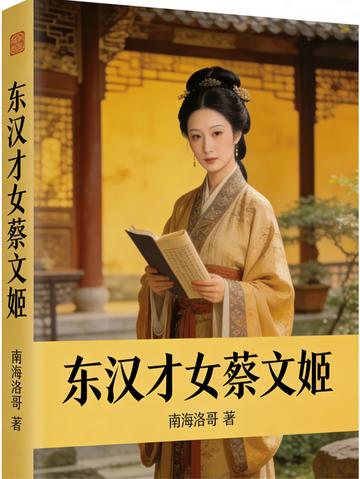
At the end of the Eastern Han Dynasty, the world was in chaos and turmoil. Chen stayed in the Cai Mansion and her scholarly reputation was handed down from generation to generation. From the day she was born, Cai Wenji was immersed in the rhyme of pen, ink and music. She studied hard with her father Cai Yong. She broke the string at the age of nine and understood the meaning. She completed the poem at the age of ten. With her extraordinary talent, she first showed her talents as a talented woman.
Her childhood included the smoke of willow silk left in the courtyard, the warmth and longness of Wuhui's smoke, but she also experienced many ups and downs - her father was demoted and fled to a foreign country. From the wind and sand in Shuofang to the mist and rain in the south of the Yangtze River, she persisted in writing in poverty and tempered her character in the turmoil. After returning to Chenliu, her family was in a better position. She devoted herself to poetry, literature and musical instruments, and her reputation gradually spread, but she could not escape the torrent of troubled times.
This book retells Cai Wenji's growth path from a young girl from a famous family to a talented woman in troubled times, and connects the court disputes and human fireworks in the late Eastern Han Dynasty. It does not deify the aura of a talented woman, nor does it deliberately exaggerate the tragedy. It only writes about her perseverance in the ups and downs, her concern in the separation, and her resilience in the desperate situation.
The pen and ink are the bones, and the sound of the piano is the soul. Watch a generation of talented women settle down with poetry and calligraphy, and establish their lives with their character. In the years when the mountains and rivers are broken, they use the melancholy of "Poems of Sorrow and Anger" and the clearness of the music to retain a piece of Chinese charm and tell a story of perseverance and tenderness in troubled times.