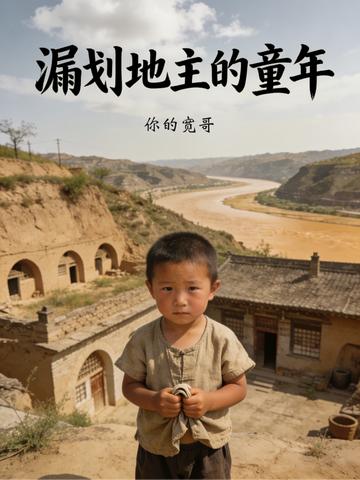
In 1966, the wind on Niutou Plateau in Tongguan County was stronger than the waves of the Yellow River during the flood season. Four-year-old Zheng Zeming still doesn't understand what "unzoned landowners" mean. He only remembers that the plateau is very high and the ditch is very deep. After the flood, adults can always pick up black coal from the river beach. He didn't know that the front yard of his old Guanzhong house with two entrances had already been used as a granary by the production team; he didn't even know that every time night fell, when his father was twisting a silver needle to treat the villagers' minor illnesses, there was a kind of frustration and helplessness hidden in his eyes.
This is a memory of a special era from the innocent perspective of a child. The novel uses five-point warm writing to delicately describe the winds of the four seasons on the plateau, the clear springs with iron hooks, and the children's play at the edge of the forbidden ditch. It also uses five-point undercurrents of restraint to profile how composition issues are always present - the silhouette of the uncle being put on stage with a high hat, the silence of the two older brothers who missed the opportunity to join the army due to their family background, and the childhood sting caused by an essay "Poor and lower-middle peasants refused to agree."
The book has a total of eighty episodes and strictly follows realistic literary techniques, focusing on recreating the carefreeness, troubles and forbearance of adults in ordinary rural teenagers during that period of history through the environment, details and psychological portrayal. The story has hooks and ups and downs. It not only retains the innocent childhood fun, but also allows readers to feel the undercurrent and tenacity under the torrent of the times between the lines.
Wonderful, attractive
Worth reading, very picturesque