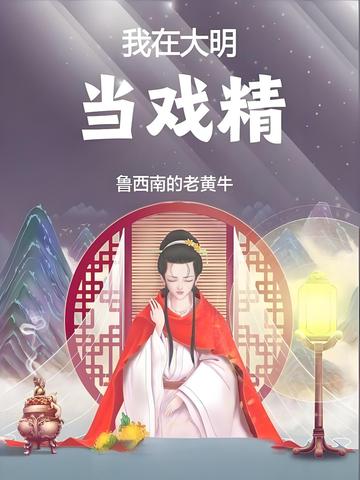
“They say actors have no feelings, yet the deepest ‘feelings’ in this world are hidden in operas. They say prostitutes have no honor, yet the greatest ‘honor’ at court is performed to the beat of drums. Since I’ve been reborn as an actor, I’ll take to this worldly stage and sing a thoroughly clear-eyed Farewell My Concubine.”
The heroine, Shen Qingdai, rises from the lowliest of performers to become the “Blue-Robed Envoy,” a woman who can stir the currents of the court. Her life is marked by countless betrayals, deceptions, and brushes with death, but she always remains clear-eyed: clear about what she wants, clear about who is friend and who is foe, and clear that in this world where people devour one another, she alone can be her own King.
She will not be Consort Yu, Lady White Snake, or a supporting character in anyone else’s story. She will be the one who performs. She will watch Farewell My Concubine, watch heroes meet their ends, watch the empire change hands, and then sing of it all for others.
A “play within a play” and a “case within a case.” The heroine doesn’t transmigrate into the body of a princess or noblewoman, but into that of an ordinary martial actress in the Qinghe Troupe, a Kunqu opera troupe in Jiangnan. She uses the cleverness found in the operas staged by the troupe (The Peony Pavilion, The Injustice to Dou E, Farewell My Concubine, The Romance of the Western Chamber, The Legend of the White Snake, The Butterfly Lovers, The Fairy Couple, The Peach Blossom Fan, A Stroll with the Emperor, The Palace of Eternal Life, Mulian Rescues His Mother, Zhong Kui Marries Off His Sister, and The Court Scroll) to master political intrigue, military strategy, and the reading of people. With her powers of observation honed in the troupe, she solves major court cases and ultimately rises from performer to legendary head of the imperial secret service, such as the Embroidered Uniform Guard or the Eastern Depot.